What a Luxury Brand Digital Experience Should Deliver in 2026
By Victor Haymann, Founder · 6 August 2026
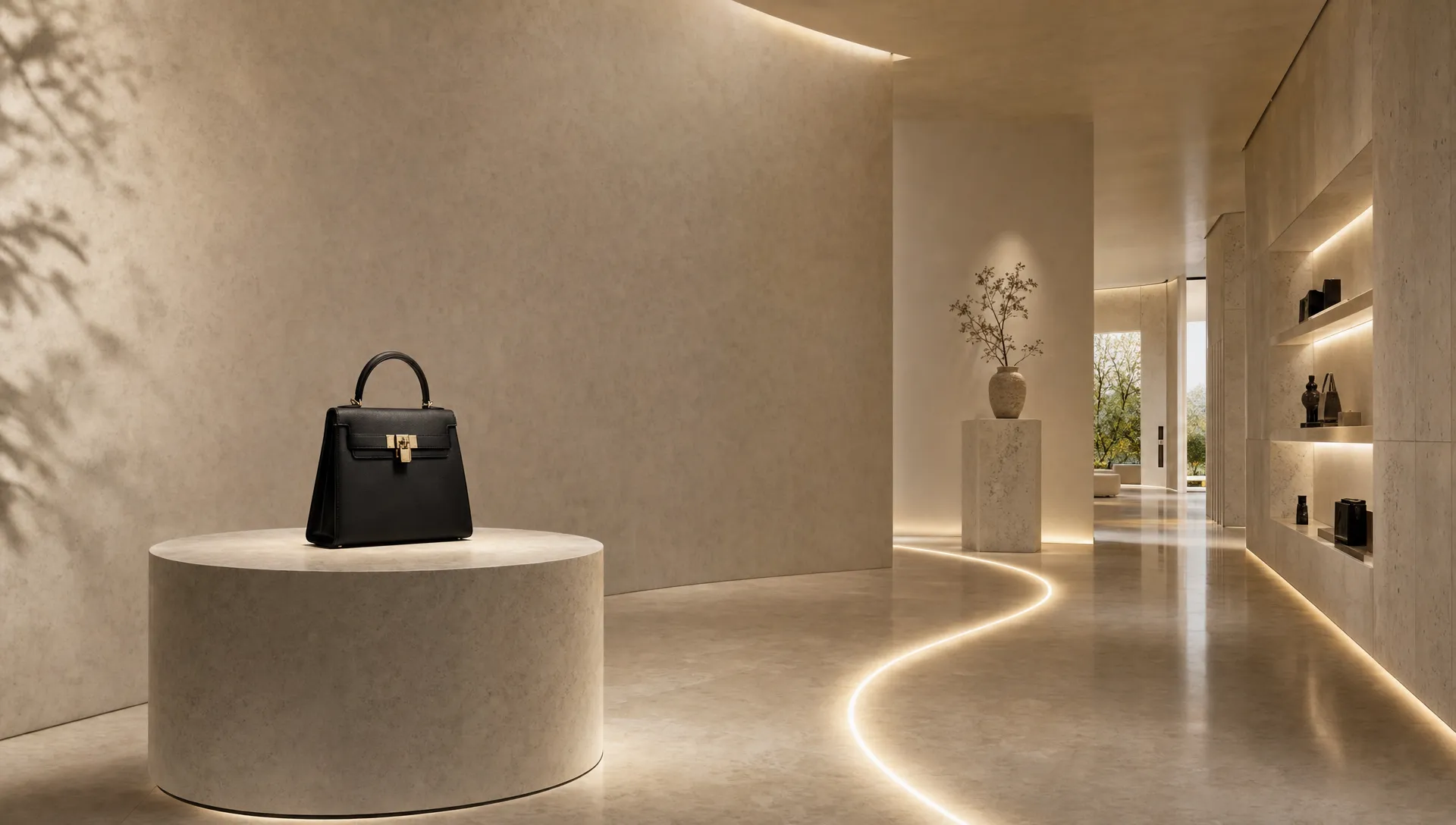
A luxury brand digital experience in 2026 has one job: make desire measurable without making it feel measured.
For years, digital luxury was asked to look beautiful. That is no longer enough. A film, a landing page, a product page, an online event, a virtual boutique, each must now carry a sharper commercial role. It must hold attention, increase product confidence, create emotional ownership and move the client toward a clear next action.
The market has changed. Growth is more selective, audiences are harder to impress and acquisition costs have made empty traffic feel very expensive. Bain & Company’s luxury market research has consistently pointed to a more demanding, more polarized luxury client. In that context, a luxury brand digital experience cannot behave like decoration. It has to become an active part of the maison’s desirability system.
The question for 2026 is simple. What should it deliver?
It should make the brand feel closer, not smaller
Digital has often flattened luxury. A couture silhouette becomes a thumbnail. A watch movement becomes a product grid. A fragrance universe becomes a banner. The first standard for 2026 is therefore not technological. It is emotional scale.
A strong digital experience should restore presence. It should make the product feel crafted, dimensional and alive. It should let the audience sense the weight of a bottle, the grain of leather, the reflection on a dial, the atmosphere of a private salon or the tension of a campaign world.
This is where ultra-realistic CGI, real-time 3D and virtual environments matter. Not because they are modern. Because they allow the brand to build moments that a flat asset cannot carry. They give a client something to enter, not only something to view.
The experience should not imitate a store. It should translate what makes the brand magnetic into a digital form. A maison does not need another website section. It needs a memorable encounter.
It should turn attention into intent
Attention is easy to buy and hard to deserve. In 2026, the difference between a digital stunt and a luxury brand digital experience is what happens after the first impression.
A beautiful immersive moment must lead somewhere. To a product discovery. To a configuration. To a clienteling request. To a store appointment. To a wishlist. To a purchase. To a CRM signal that helps the brand understand who is truly interested.
This does not mean making the experience aggressive. Luxury does not need louder calls to action. It needs smoother intent paths. The client should never feel pushed, but the next step should always feel natural.
A fragrance world can invite the visitor to discover notes through atmosphere, then guide them to the right product. A jewelry experience can let a client explore stones, scale and light, then request a private viewing. A car configurator can turn curiosity into a saved specification and a qualified lead.
The best experiences keep the magic intact while making behavior legible. That is why immersive commerce turns attention into action when emotion, interaction and commercial architecture are designed together.
It should remove uncertainty from high-value decisions
Luxury purchases often begin with emotion, but they rarely convert on emotion alone. Especially online. The client wants confidence. They want to understand size, finish, proportion, texture, color and combinations. They want to know what the object will feel like in their world.
In 2026, a premium digital experience should reduce hesitation before it appears. This is especially true in watches, jewelry, handbags, beauty, fragrance and automotive, where choice is personal and details matter.
Static product images cannot carry every nuance. A client choosing between metals, straps, dials, stones, shades or trims needs more than a carousel. They need control. They need to see the product respond.
A well-designed configurator does more than display variants. It creates ownership before purchase. When a client builds the object, even subtly, they begin to project themselves into it. That emotional shift is why a 3D product configurator can lift luxury conversion when it is crafted with the same care as the product itself.
The visual standard is critical. If the render feels synthetic, confidence drops. If the interaction feels cheap, the brand loses authority. Luxury digital product exploration must feel precise, fluid and composed. The client should never see the technology. They should only feel certainty.
It should work instantly, everywhere luxury clients are
The most accomplished digital experience fails if it asks too much of the audience.
A client will not download an app to discover a campaign. They will not wait through friction to configure a product. They will not forgive a broken mobile journey because the experience is technically ambitious.
In 2026, high-end digital experiences must open directly in the browser, perform on mobile and preserve visual quality without forcing the client into a heavy process. This is where real-time streaming becomes valuable. Unreal Engine and NVIDIA GDN are not interesting because they sound advanced. They are interesting because they allow cinematic, interactive experiences to reach a client immediately, with no download and no compromise on image ambition.
For luxury commerce, that changes the brief. The brand can deliver a product experience closer to a film, a boutique visit and a configurator at once. The client simply opens a link. That simplicity is the luxury.
For a deeper view on the commercial impact, The New Face has explored why Unreal Engine Pixel Streaming changes luxury commerce, especially when maisons need both spectacle and access.
It should create a useful data layer without breaking the dream
Luxury brands do not lack data. They often lack meaningful digital behavior.
A standard product page can tell you what was clicked. A strong interactive experience can reveal what was desired. Which variation did the client explore? How long did they spend with a product? Which material, shade, stone, trim or environment held their attention? Where did they hesitate? What did they save?
This is not about surveillance. It is about listening better. In a luxury context, intent is often expressed through subtle behavior. The experience should capture that behavior in a way that helps teams improve media, merchandising, CRM and clienteling.
The right KPI structure is simple. It connects emotional engagement to commercial action.
| What the experience should deliver | What the client feels | What the brand can measure |
|---|---|---|
| Cinematic attraction | “This world feels worth entering.” | Engaged session time, scroll depth, return visits |
| Product confidence | “I understand the object better.” | Variant exploration, zooms, material views, comparison behavior |
| Emotional ownership | “This feels like mine.” | Saved configurations, wishlist adds, share actions |
| Commercial movement | “The next step feels natural.” | Appointment requests, lead forms, add-to-cart, conversion rate |
| Production efficiency | “The brand stays visually consistent.” | Asset reuse, cost per visual, campaign versioning speed |
The key is not to measure everything. It is to measure what proves that desire is moving.
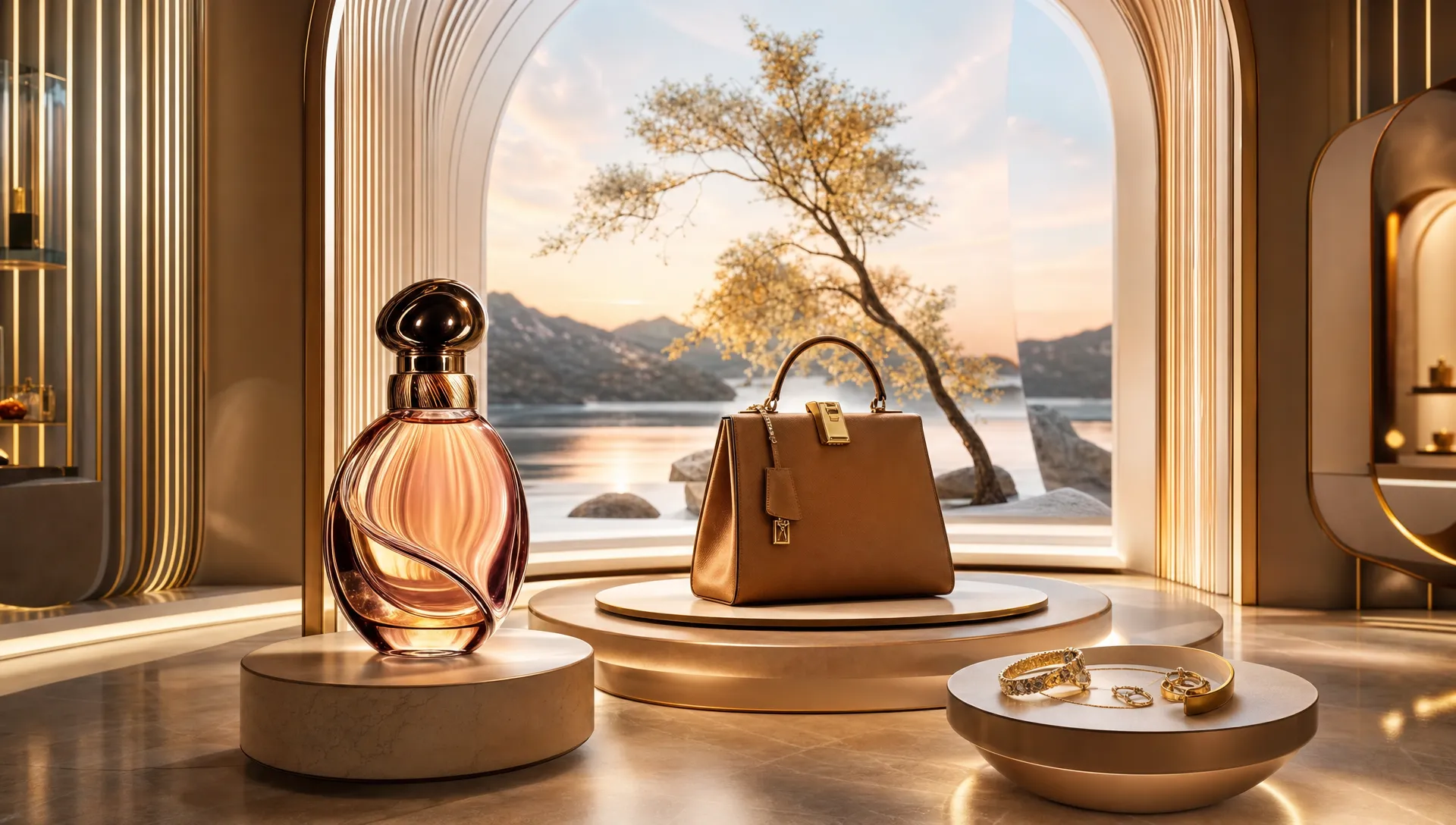
It should make content production more intelligent
Luxury brands need more content every year. More markets. More formats. More product variations. More campaign adaptations. More retail, social, CRM and ecommerce assets. The old model, based on repeated physical shoots for every content need, struggles under that pressure.
In 2026, the strongest digital experience is not an isolated activation. It is part of a content system.
A virtual product, once built at the right level, can support hero imagery, ecommerce visuals, social films, configurators, interactive launch experiences, retail screens and CRM content. The value is not only creative. It is operational.
For many categories, high-end CGI and real-time production can divide production cost by three compared with repeated physical shoots, especially when the brand needs many variants, colors or market adaptations. It can also raise consistency, because every asset comes from the same controlled visual foundation.
This does not replace craft. It protects it. The product can be lit perfectly. The material can be approved once and reused. The campaign world can evolve without rebuilding everything. Teams can move faster without accepting lower standards.
The result is not “more content.” Luxury does not need more noise. The result is more relevant content, produced with greater control.
It should give the maison a world, not only a campaign
A campaign is seen. A world is remembered.
Luxury has always been spatial. Boutiques, runway sets, ateliers, showrooms, private dinners, exhibitions and heritage locations all shape desire because they create context. Digital now has the power to do the same.
In 2026, virtual environments should not be treated as novelty. They should be treated as brand memory architecture. A well-built environment can express codes, mood, season, craft and product hierarchy in a way that a conventional landing page cannot.
This matters because luxury audiences have exceptional visual memory. They remember atmosphere before copy. They remember the corridor, the light, the sound, the object placement, the gesture of discovery. A digital world can give them those cues at global scale.
The best brand worlds do not ask the audience to “explore” for the sake of it. They guide attention with rhythm. They reveal products with intention. They build desire through space, not clutter.
For a heritage maison, that world might translate an archive into an interactive experience. For beauty, it might turn a fragrance note into a place. For automotive, it might make performance, personalization and landscape feel inseparable. For jewelry, it might let light become the narrator.
It should respect the codes of luxury commerce
A luxury digital experience should never feel like a gaming layer dropped onto a maison. It must understand restraint.
Not every interaction needs animation. Not every product needs a 360-degree spin. Not every world needs a quest. The experience should know when to move and when to stay still.
Luxury interaction is about pacing. It gives the client control without making them work. It creates moments of reveal. It makes the interface disappear. It gives priority to product, atmosphere and decision.
This is where many digital experiences fail. They confuse immersion with density. They add features instead of removing friction. They create spectacle without taste.
The strongest work feels inevitable. The technology is invisible. The brand is unmistakable.
What CMOs should demand in a 2026 brief
A stronger brief starts with outcomes, not formats. Before deciding whether the brand needs a configurator, a virtual boutique, a CGI campaign or a streamed real-time experience, leadership should define the role of the experience.
The essential questions are direct:
- What should the audience feel in the first ten seconds?
- What product uncertainty should the experience remove?
- What action should feel natural at the end?
- Which behavior will prove intent?
- Which assets should be reused after launch?
- Which market, CRM or ecommerce teams should benefit from the same production base?
These questions protect the project from becoming a visual experiment. They force the experience to serve brand equity and business performance at the same time.
The production partner matters here. Luxury-grade aesthetics without real-time mastery can create beautiful assets that do not perform. Real-time technology without luxury taste can create interaction that damages the brand. The rare value is the combination: cinematic image quality, product truth, interactive fluency and KPI discipline.
That combination is becoming the new standard.
The 2026 benchmark: desire, confidence, action
A luxury brand digital experience should deliver three things in 2026.
First, desire. The client must feel the brand’s world immediately and remember it after leaving.
Second, confidence. The experience must help them understand the product with more precision, more emotion and less hesitation.
Third, action. The journey must turn attention into a measurable next step, without ever feeling transactional too early.
When these three elements work together, digital becomes more than a channel. It becomes a front-of-house experience, a content engine and a commercial signal at once.
That is the shift. The next generation of luxury digital is not about adding technology to prestige. It is about giving prestige a more powerful, measurable and memorable form.
Frequently Asked Questions
What is a luxury brand digital experience? A luxury brand digital experience is a high-end online interaction that expresses the brand’s world, helps the client understand the product and guides them toward a meaningful next step, such as configuration, appointment, purchase or CRM engagement.
What should a luxury brand digital experience measure in 2026? It should measure engaged session time, product exploration, saved configurations, wishlist activity, appointment requests, lead quality, conversion and asset efficiency. The goal is to understand whether desire is becoming intent.
Are immersive experiences only relevant for ecommerce? No. They can support campaign launches, retail storytelling, clienteling, CRM, product education, private events and global content production. Ecommerce is often one use case, not the full value.
Why does real-time 3D matter for luxury brands? Real-time 3D matters when it lets clients interact with products or environments instantly, with cinematic quality and without downloading an app. Its value is access, emotion and clearer product confidence.
Can CGI replace traditional luxury shoots? In many cases, CGI can reduce the need for repeated physical shoots, especially for variants, ecommerce content and campaign adaptations. The strongest model is not replacement for its own sake. It is using CGI where it improves quality, consistency, speed and cost.
Build the experience your audience will remember
In 2026, luxury digital cannot be treated as a surface. It has to carry the brand, the product and the business case in one composed experience.
The New Face builds KPI-driven real-time experiences, ultra-realistic CGI and immersive worlds for ambitious luxury, beauty, fashion and premium automotive brands. Incubated by NVIDIA, the studio combines luxury-grade aesthetics with the real-time mastery needed to deliver cinematic interaction straight to the browser.
The goal is simple. Create digital experiences that clients remember, teams can measure and brands can scale with confidence.
Get in Touch
Let's talk about your next project.