How a 3D Product Configurator Lifts Luxury Conversion
By Victor Haymann, Founder · 16 July 2026
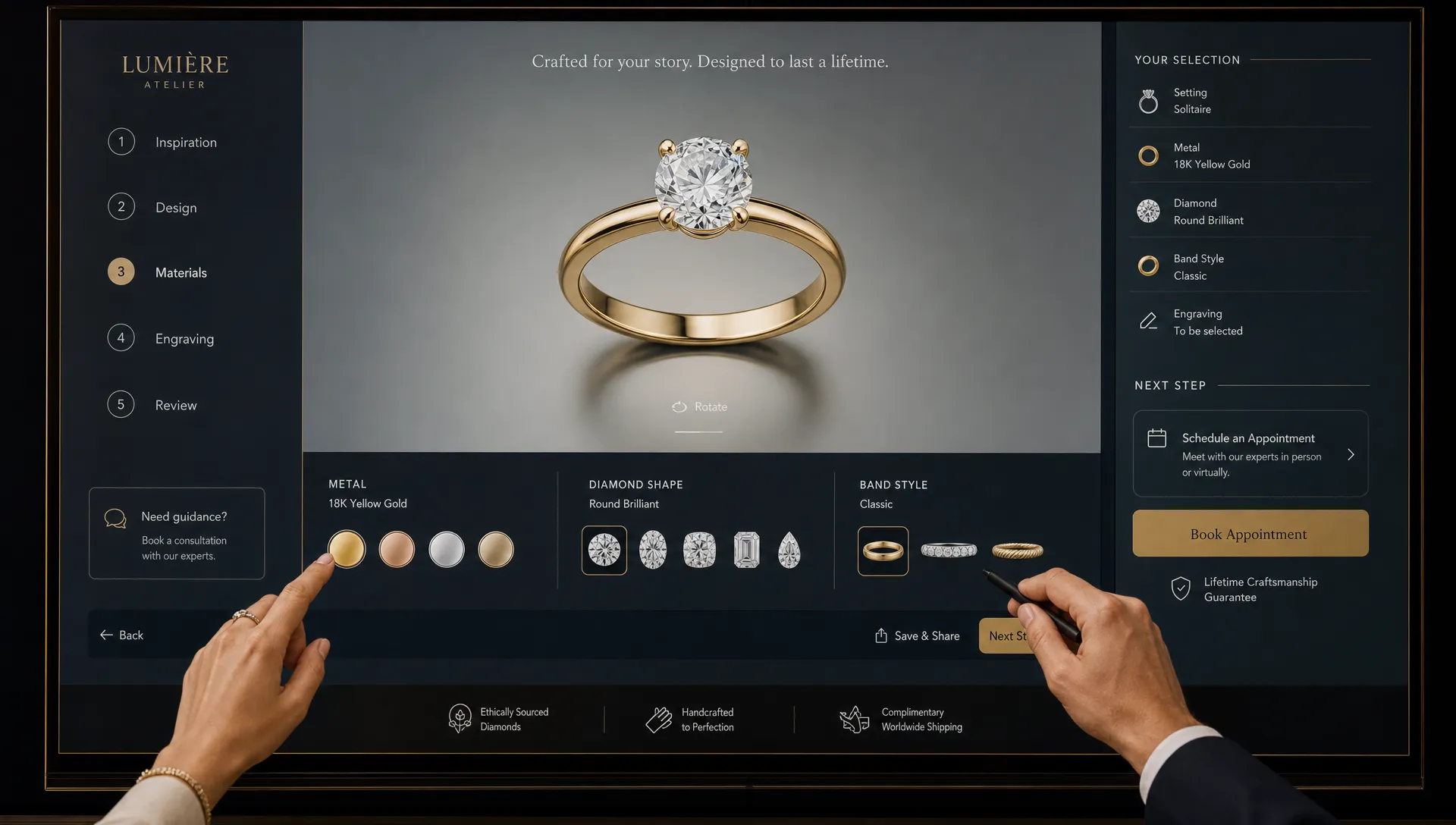
Luxury clients do not need a louder product page. They need a clearer reason to move.
In luxury, conversion is not only an add-to-cart event. It can be a booked appointment, a saved configuration, a concierge request, a qualified lead, a boutique visit, a deposit, or a purchase. The common thread is commitment.
A 3D product configurator lifts luxury conversion because it changes the state of the visitor. The client is no longer looking at an object from a distance. They are shaping it, testing it, and imagining it as theirs.
That shift is small on the screen. It is large in the mind.
Luxury conversion is a certainty problem
Most luxury clients arrive with desire. The brand has already done the hard work of creating attraction through heritage, image, celebrity, retail, press, and social proof.
What blocks conversion is often not lack of desire. It is uncertainty.
Will this leather work with my interior? Is this dial too strong for daily wear? Does the rose gold look warm or pink? Which bottle size feels like a gift, not a compromise? Is the black lacquer more elegant than the brushed metal? Can I see the piece in my version before I ask for an appointment?
Static imagery answers only part of that. It shows the product as the brand chose to photograph it. A luxury 3D product configurator answers the next question, the one that matters commercially: what does it look like for me?
The difference is not cosmetic. It changes the quality of the session. A visitor who interacts with materials, colors, finishes and engravings is giving attention with intent. They are not scrolling. They are deciding.
The configurator turns admiration into active choice
A proper luxury configurator is not a menu of options. It is a guided experience of authorship.
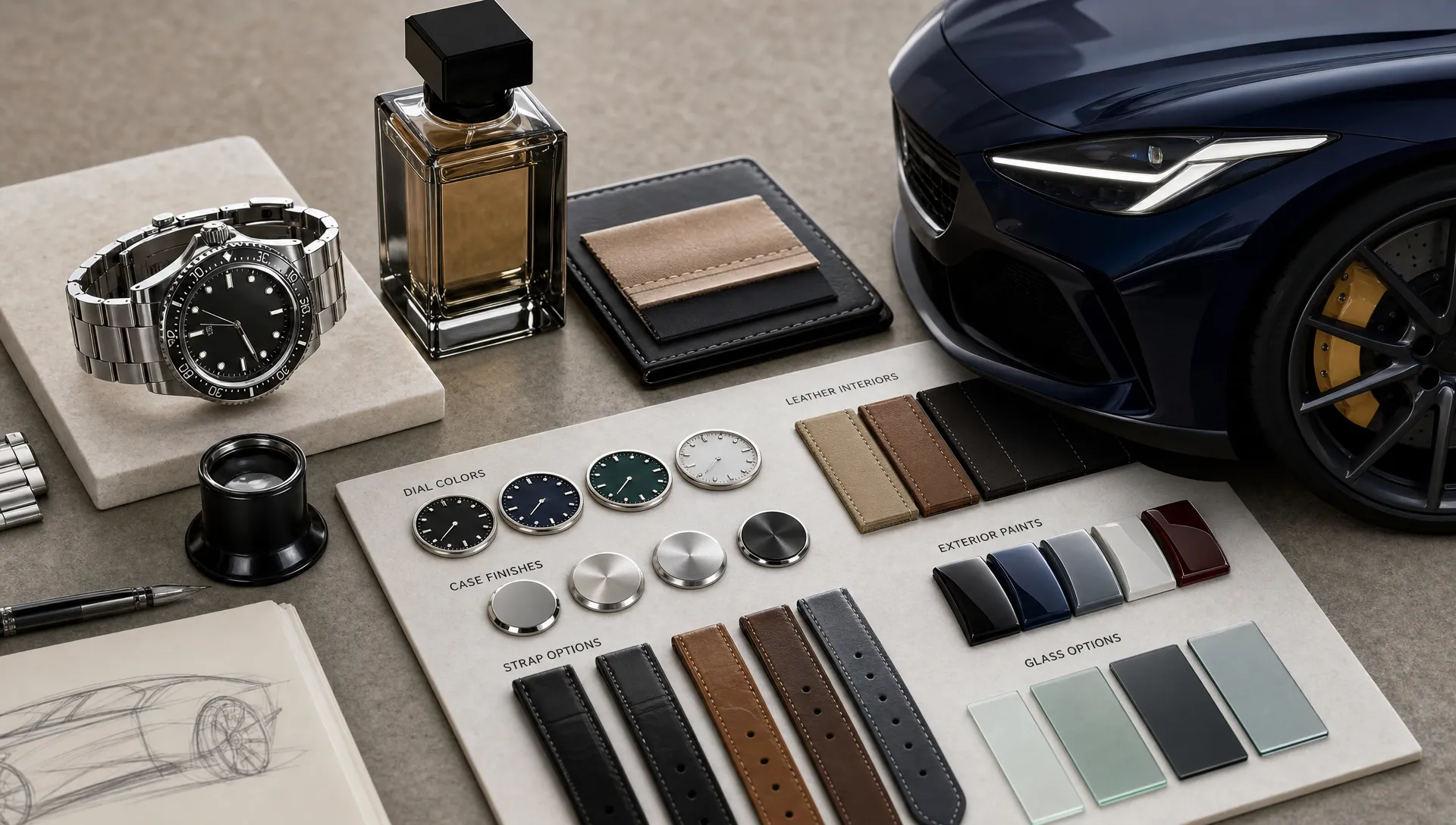
For automotive, that may mean seeing paint, wheels, trim, stitching and interior materials in a coherent scene. For fine jewelry, it may mean comparing metal, stones, straps, scale and light behavior with extreme precision. For beauty and fragrance, it may mean gift sets, engraving, caps, sleeves, bottle sizes and limited-edition finishes presented as a desirable ritual, not as a form.
The strongest configurators feel closer to a private salon than a software tool. The interface disappears. The product remains.
This is where real-time 3D matters. Not because the technology is impressive, but because it keeps emotion alive. If every change feels instant, the client stays in flow. If every material looks credible, trust rises. If the experience opens directly in the browser, with no download, the path from campaign to consideration stays clean.
That is the commercial value of technologies such as Unreal Engine and NVIDIA GDN when used well. They make high-fidelity interaction accessible at the moment of desire.
Where the conversion lift comes from
The lift does not come from novelty alone. Novelty fades quickly. Conversion comes from reducing friction while increasing desire.
A luxury configurator works because it gives the client four things at once: visual certainty, emotional ownership, controlled personalization and a clear next step.
| Luxury hesitation | Static product content | 3D product configurator | KPI to watch |
|---|---|---|---|
| I cannot picture my preferred version | Shows selected campaign angles | Lets the client explore the exact variant | Configuration completion rate |
| I am unsure about color or material | Relies on separate swatches and thumbnails | Shows finishes on the product in context | Option interaction depth |
| I want the piece to feel personal | Offers text fields or product filters | Turns personalization into a visual moment | Saves, shares and engraving requests |
| I need reassurance before speaking to sales | Leaves questions unresolved | Creates a clear, shareable intent signal | Appointment and concierge requests |
| I may come back later | Depends on memory and retargeting | Gives the client a version to return to | Return sessions and saved configurations |
The key word is confidence. A client who has built a version is closer to ownership than a client who has viewed five images.
They have made micro commitments. They chose the finish. They selected the color. They tested the combination. They imagined the product in their life.
By the time they request an appointment, the conversation is already warmer.
The experience must protect desire
There is a dangerous version of the configurator. It is technically functional, visually average and emotionally flat.
That version may increase interaction, but it weakens the brand.
Luxury does not convert through choice alone. It converts through taste. Every angle, reflection, shadow, transition and label must feel intentional. The client must sense that the same eye behind the campaign is guiding the interactive experience.
This is why a luxury configurator should be art directed with the same discipline as campaign imagery. Lighting, proportions, background, camera behavior and material response all carry brand meaning. For teams building the visual language around CGI, the same principles used when art directing CGI campaign imagery apply directly to interactive commerce.
A black ceramic watch cannot look plastic. A diamond cannot sparkle like a stock effect. A perfume cap cannot feel like a game asset. A leather seat cannot flatten into a texture.
The client may not name the flaw. They will feel it.
Variant volume makes the business case stronger
Luxury collections are becoming more complex. More drops. More regional needs. More personalization. More channels. More formats. More pressure on content speed.
Traditional production struggles when every variant needs to be photographed, retouched, localized and adapted across ecommerce, CRM, retail, paid media and social. At a certain point, the cost of visual consistency becomes too high.
CGI changes that equation. Once the product is built correctly in 3D, the brand can create stills, films, configurator states and campaign assets from the same controlled source. The gain is not only efficiency. It is coherence.
This is already visible in categories where precision is non-negotiable. Many watch and jewelry brands are moving in this direction because CGI can replace repetitive photography for variant-rich collections while preserving visual control.
For the right collection, a CGI content system can divide production cost by three compared with repeating a traditional shoot logic for every color, finish and market crop. The exact gain depends on product complexity and volume, but the principle is clear: the more variants a brand carries, the more valuable a single high-end visual source becomes.
A configurator is often the most visible expression of that source. It is the point where content production, commerce and client experience meet.
The configurator as an intent engine
A static product page tells you what a visitor viewed. A configurator tells you what they preferred.
That distinction matters.
If a client spends time comparing two metals, saves a version with a specific strap, changes the dial twice, then requests an appointment, the retail team should not receive a cold lead. They should receive context. The conversation can begin with taste, not qualification.
For CRM and loyalty teams, this is where the configurator becomes strategic. It creates first-party signals that are richer than clicks and more elegant than surveys. The client is not being interrogated. They are expressing preference through play.
The visible experience must feel effortless. The invisible data layer must be disciplined. Regional groups often bring in digital transformation specialists such as Anwit SAS when sovereignty, governance and analytics matter as much as the interface. Luxury brands need the same seriousness here: preference data only creates value when it is clean, consented and usable by retail teams.
The best use of configurator data is not aggressive retargeting. It is relevance.
A client who configured a white gold bracelet should not receive a generic message about the full collection. They should receive a precise invitation, a private appointment, a saved version, or a stylistic recommendation that feels human.
That is how digital behavior becomes clienteling.
Where a 3D product configurator performs best
A configurator can live on a product page, but that is only one use case.
On a campaign landing page, it can turn media traffic into active exploration. In ecommerce, it can reduce uncertainty before purchase. In retail, it can support assisted selling when the exact variant is not available in store. In CRM, it can give loyal clients early access to limited configurations. In automotive, it can turn a dream specification into a dealer conversation with real intent.
The placement should follow the business goal.
If the goal is ecommerce conversion, the next step must be direct and visible. If the goal is high-touch sales, the handoff to appointment booking must be seamless. If the goal is launch engagement, the experience should invite saving and sharing. If the goal is data enrichment, consent and CRM integration matter from day one.
A beautiful configurator with no next step is a gallery. A beautiful configurator with a measured path is a conversion asset.
What makes it convert in practice
The strongest luxury configurators share a few simple traits.
They load without asking the client to change behavior. No app. No heavy barrier. No awkward delay at the moment of interest.
They respect brand codes. The experience feels native to the maison, not like a generic tool placed inside a luxury website.
They show materials with conviction. Metal, glass, lacquer, leather, gems, fabric and reflections must behave with enough realism to support a high-value decision.
They limit choice with taste. Luxury personalization is not infinite customization. It is curated freedom.
They make the next step obvious. Save, share, book, request, add to bag, speak to an advisor. The action should match the product and price point.
They are measured from the beginning. Session time is useful, but it is not enough. A brand needs to know whether interaction creates qualified intent.
| Business question | Metric to track | Why it matters |
|---|---|---|
| Are clients engaging beyond passive browsing? | Engaged session rate and time in configurator | Shows whether the experience earns attention |
| Are they reaching a meaningful decision point? | Configuration completion rate | Measures movement from curiosity to preference |
| Which options create desire? | Most selected finishes, colors and combinations | Guides merchandising, CRM and stock conversations |
| Does interaction create commercial intent? | Appointment requests, concierge leads and add-to-cart events | Connects experience to revenue behavior |
| Does it improve the sales conversation? | Lead quality and post-appointment conversion | Shows whether digital intent helps retail close |
| Does it reduce regret? | Return rate and exchange reasons where relevant | Indicates whether better visualization improves confidence |
This is the standard that matters. Not whether the configurator looks advanced. Whether it moves the client closer to a valuable action.
The New Face perspective
A luxury 3D product configurator is not a technical module. It is a brand experience with a commercial responsibility.
At The New Face, that is the lens. The work starts with the desired client behavior, then shapes the visual system, interaction and real-time delivery around it. The studio combines luxury-grade CGI, real-time mastery and KPI-driven experience design, supported by its NVIDIA incubation, to create configurators and immersive worlds that feel premium and perform with intent.
For brands such as luxury maisons, premium automotive leaders, beauty houses, fine jewelry and watchmaking teams, the opportunity is clear.
Turn the product page into a moment of choice. Turn choice into data. Turn data into clienteling. Turn clienteling into conversion.
That is the role of the modern configurator.
Frequently Asked Questions
Does a 3D product configurator only matter for ecommerce? No. In luxury, conversion can mean a purchase, but it can also mean an appointment, a concierge request, a saved configuration or a qualified boutique visit. A configurator is valuable whenever it moves the client from interest to intent.
Will too much personalization weaken luxury positioning? Not if the experience is curated. Luxury clients do not need unlimited options. They need meaningful choices presented with taste, restraint and strong art direction.
What categories benefit most from a 3D product configurator? Variant-rich categories benefit first, including automotive, watches, jewelry, leather goods, beauty, fragrance, eyewear and personalized gifts. The stronger the role of material, color, finish or engraving, the stronger the case.
How should a brand measure configurator success? Track engaged session rate, configuration completion, saves, shares, appointment requests, add-to-cart events, lead quality and conversion after retail follow-up. The goal is not interaction alone. The goal is qualified movement.
Does a configurator replace traditional campaign imagery? No. It extends it. Campaign imagery creates desire. The configurator lets the client explore that desire personally, with a clearer path to action.
Build the product experience your client will remember
Static content can make a product desirable. A luxury 3D product configurator can make it feel chosen.
For a high-consideration client, that is the commercial leap. From seeing to shaping. From interest to intent. From admiration to conversion.
If your next collection needs an experience that feels as refined as the product itself, The New Face can help craft it with the visual standard, real-time fluency and KPI discipline luxury brands now require.
Get in Touch
Let's talk about your next project.