What 3D Gaussian Splatting Changes for Luxury Brand Worlds
By Victor Haymann, Founder · 15 July 2026

Luxury brand worlds are entering a more demanding phase. Audiences no longer want to look at a campaign universe from the outside. They expect to enter it, move through it, understand its codes, and feel that the space has weight.
That is where 3D Gaussian Splatting becomes interesting for luxury. Not because it is a new rendering technique. Because it changes the relationship between a maison and its spaces.
A flagship, an atelier, a villa, a runway set, a fragrance garden, a private showroom, a watchmaking manufacture can now be captured with a level of visual truth that feels immediate. The result is not a flat digital twin. It is a place with atmosphere, light behavior, patina, reflections and memory.
For brands built on place, gesture and detail, that matters.
What 3D Gaussian Splatting means in brand terms
3D Gaussian Splatting is a way to reconstruct a real scene from captured images or video, then render it as a navigable 3D environment. The technique became widely discussed after the 2023 research paper 3D Gaussian Splatting for Real-Time Radiance Field Rendering, which showed that scenes could be rendered at real-time speeds while preserving high visual quality.
For a CMO or digital innovation director, the useful translation is simple: it helps turn real places into interactive brand worlds faster, with more visual authenticity than many older capture methods.
It is especially strong when the world itself carries value. A boutique with rare materials. A backstage set created for one night. A heritage location that few clients will ever visit. A private salon where high jewelry is presented. A fragrance landscape that needs to feel sensorial before it becomes commercial.
The point is not to reproduce reality for its own sake. Luxury does not need neutral scans. It needs controlled emotion.
3D Gaussian Splatting gives creative teams a powerful base layer of reality. Art direction, CGI, interaction design and real-time streaming turn that base layer into an experience.
Why luxury brand worlds need this now
The luxury audience is visually literate. It has seen flawless product films, perfect campaign stills and infinite social content. The bar is no longer beauty alone. The bar is memory.
A strong virtual world does three things at once. It gives the audience a place to remember, a reason to stay, and a path to act.
This is why spatial storytelling has become more valuable than decorative digital scenery. A world can carry brand codes better than a page. It can place a product in a ritual, a room, a material culture, a light condition. It can make the client feel invited rather than targeted.
We explored this broader shift in how virtual environments make campaigns more memorable. Gaussian Splatting adds a new dimension to that logic: the ability to anchor the world in captured reality, then expand it with the precision of CGI and real-time design.
That balance is powerful. Too much pure fantasy can feel generic. Too much documentation can feel passive. The new opportunity sits between both.
What changes for brand storytelling
Captured atmosphere becomes a luxury asset
Most digital environments are judged by geometry and polish. Luxury environments are judged by atmosphere.
A marble floor that reflects softly. A lacquered wall that catches light at the edge. A couture salon with imperfect depth. The aged surface of a workbench. The scale of a staircase. These details are not decorative. They are brand memory.
3D Gaussian Splatting is valuable because it can preserve much of that atmosphere from the original place. It is not only rebuilding a room. It is carrying the visual evidence that the room exists.
For heritage brands, this is a major shift. Places that were previously reserved for VIPs, press or internal culture can become part of a broader digital experience without losing their intimacy.
Campaign sets can live beyond the launch window
Luxury still invests heavily in physical worlds: runway spaces, pop-ups, scenography, flagship installations, private event sets. Many are dismantled after a few days. Their media value lives in film, photography and social edits.
With Gaussian Splatting, a set can become an explorable asset after the event. The brand can extend the life of the investment, not by replaying the show, but by letting selected audiences enter the space in a new way.
That changes the economics of virtual production. The world becomes reusable across CRM, retail, e-commerce, press, training and private clienteling. When paired with CGI product content factories, this model can reduce repeated set builds and reshoot cycles significantly, in some cases dividing production cost by three compared with conventional shoot workflows.
The value is not only efficiency. It is continuity. A campaign world no longer disappears when the media flight ends.
The client journey becomes spatial
Luxury e-commerce often compresses desire into grids, product pages and filters. Efficient, yes. Memorable, rarely.
A brand world can slow the journey down without adding friction. The client enters a space, discovers an object, understands its context, then moves toward a product detail, appointment request, wishlist or configuration.
This is particularly relevant for beauty, fragrance, watches, jewelry and premium automotive. These categories sell through detail, mood and projection. A scent needs a world. A watch needs scale and light. A car needs presence. A jewel needs controlled intimacy.
The experience should still convert. It simply earns the conversion through emotion first.
| Brand ambition | What 3D Gaussian Splatting can unlock | Where CGI and real-time design still matter |
|---|---|---|
| Extend a physical event | Preserve the set as an explorable world | Add guided storytelling, product hotspots and cinematic sequences |
| Share a private location | Open access to an atelier, salon or heritage space | Control pacing, visibility, brand hierarchy and privacy |
| Create richer e-commerce | Move from product grid to spatial discovery | Connect the world to product detail, configuration and conversion paths |
| Support CRM and VIP journeys | Build invitation-only environments with high emotional value | Personalize content, timing and calls to action |
| Scale campaign assets | Reuse one world across channels and markets | Maintain consistency through CGI art direction and localized content |
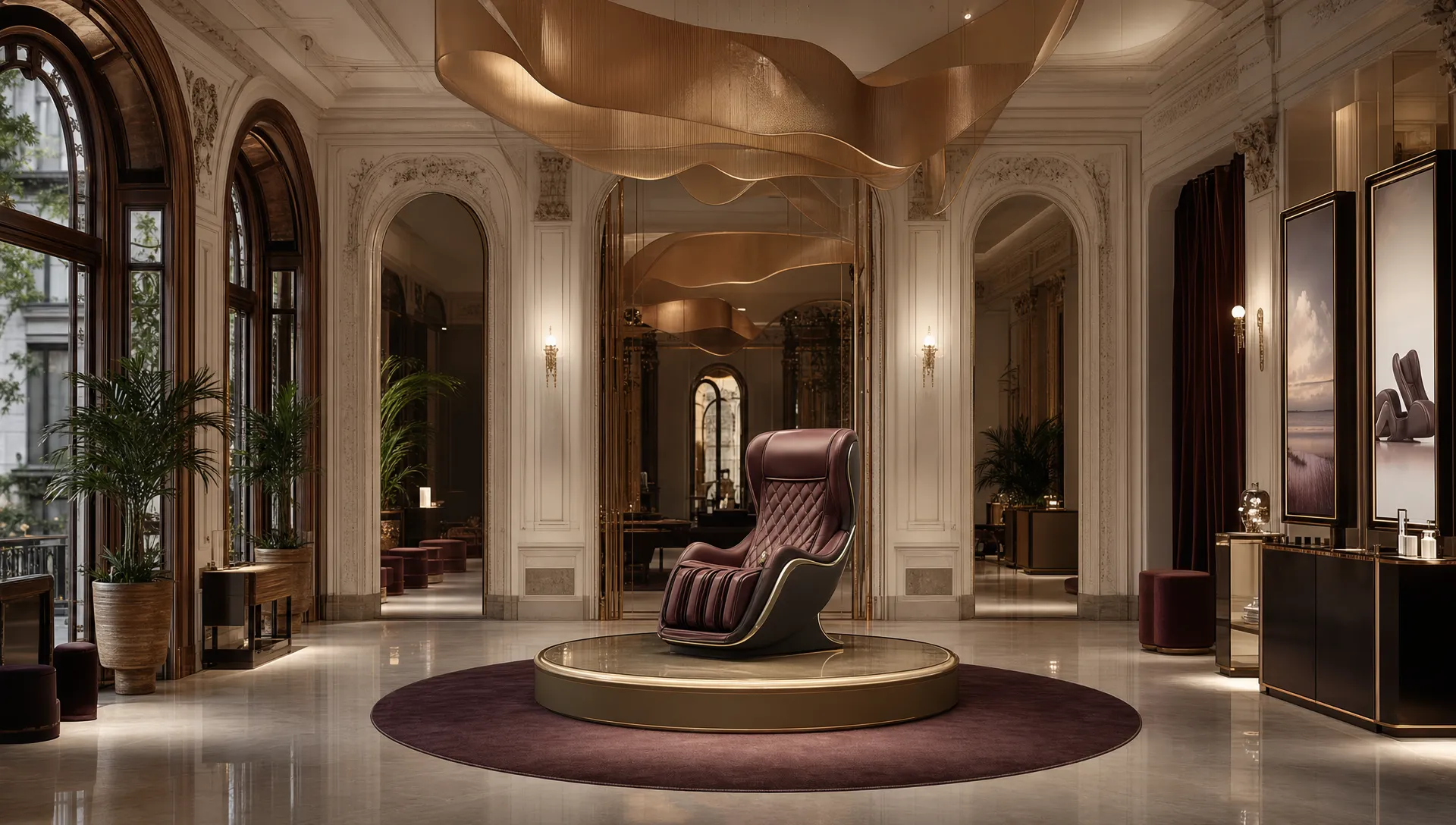
Where 3D Gaussian Splatting is strongest
The strongest use cases are not generic showrooms. They are places with aura.
A couture atelier has aura because it contains gesture. A fragrance garden has aura because it carries origin. A flagship has aura because it expresses architecture, service and status. A watchmaking workshop has aura because it makes precision visible.
Gaussian Splatting helps translate that aura into a digital environment with less visual flattening. It gives the audience the sense that they are inside a real space, not looking at a stylized approximation.
This is why it is especially compelling for luxury houses with strong physical codes. The richer the world, the more the technique has to capture.
But it should not be treated as a shortcut to excellence. Capture is not art direction. A beautiful place can still become a weak experience if the journey is unclear.
The creative question remains the same: what should the audience feel, remember and do?
Where it should not replace CGI
3D Gaussian Splatting is not a replacement for high-end CGI. It is a new layer in the production language.
For hero products, CGI often remains the more controlled choice. A watch case, a diamond setting, a lipstick bullet, a perfume bottle, a leather grain or a car interior needs exact material behavior, perfect geometry and controllable lighting. The product must be immaculate from every angle.
That level of control is why many watches and fine jewelry brands are already shifting critical product imagery toward CGI. The reasons are strategic, not technical: consistency, precision, scalability and visual quality. We covered that shift in detail in why watches and fine jewelry brands are replacing photography with CGI.
The ideal luxury workflow is not Gaussian Splatting versus CGI. It is Gaussian Splatting for captured atmosphere, CGI for perfect products, and real-time technology for interaction.
This combination lets the brand preserve the truth of a place while still controlling the object, the light, the pace and the commercial path.
The browser changes the business case
A virtual brand world only matters if people can access it. Heavy downloads and app installs create friction. Luxury clients may be curious, but they are not patient with poor access.
This is where real-time streaming becomes commercially important. When an Unreal Engine experience can be streamed directly through the browser, the brand can deliver a high-end world from a campaign landing page, CRM invitation, retail link or private client message.
For The New Face, being part of the NVIDIA incubation program matters because it supports first-tier access to real-time rendering and streaming technologies such as NVIDIA GDN. The value for the brand is clear: richer experiences can reach the client faster, with less device dependency.
The technology is only useful because it removes friction from the invitation.
A client should not have to understand the stack. They should simply enter the world.
How to measure a luxury brand world
The mistake is to measure immersive experiences only like media impressions. A brand world is closer to a flagship visit than a banner campaign. It deserves a richer KPI model.
The right metrics depend on the objective, but the most useful ones often include session depth, interaction rate, product exploration, completion of key narrative moments, appointment intent, configurator engagement, repeat visits and asset reuse across markets.
The most mature brands also look at cost per qualified engagement. A campaign film may generate reach. A virtual world can reveal intent. The difference matters.
A visitor who spends several minutes exploring a high jewelry salon, opens product details, saves pieces and requests an appointment is not just consuming content. They are moving through desire.
That is the promise of the format. Not spectacle. Signal.
What luxury teams should do next
The smartest question is not, “Should we use 3D Gaussian Splatting?”
The smarter question is, “Which part of our brand world deserves to become accessible?”
Start with the place that already carries meaning. A location clients dream of visiting. A set that deserves a longer life. A ritual that is hard to explain in flat content. A product universe that needs more emotional context before conversion.
Then define the audience and the action. Is the world for public campaign reach, private clienteling, e-commerce discovery, press, retail training or loyalty? Each use case needs a different rhythm.
Finally, protect the art direction. A captured world must still feel authored. Materials, light, navigation, sound, product placement and pacing should all serve the brand idea.
For teams building campaign visuals around these worlds, the same discipline applies to every frame. The principles behind art directing CGI campaign imagery remain essential: concept first, image second, technology last.
Frequently Asked Questions
What is 3D Gaussian Splatting in simple terms? 3D Gaussian Splatting is a technique that turns captured images or video of a real place into a navigable 3D scene. For luxury brands, its value is the ability to preserve atmosphere and spatial presence, then use that scene inside an interactive experience.
Is 3D Gaussian Splatting better than CGI? It is different. Gaussian Splatting is strong for captured environments and real places with rich atmosphere. CGI is stronger when a product needs perfect geometry, controlled materials, precise lighting and scalable variations. The best luxury experiences often combine both.
Can 3D Gaussian Splatting be used for e-commerce? Yes, when it supports a clear journey. It can turn product discovery into a spatial experience, then guide clients toward product details, configuration, wishlists, appointment requests or purchase paths. The world must be beautiful, but it must also move the client forward.
What types of luxury brands benefit most from this technique? Brands with strong physical spaces, heritage locations, craft environments, event scenography or sensory product universes benefit most. This includes fashion, beauty, fragrance, watches, fine jewelry, premium automotive and hospitality-led luxury.
Build a world your audience can remember
3D Gaussian Splatting will not make a luxury brand world iconic on its own. It gives brands a sharper way to capture reality. The experience still needs taste, hierarchy, narrative and measurable intent.
That is where the opportunity is.
The New Face builds KPI-driven virtual experiences for ambitious brands, combining luxury-grade aesthetics, ultra-realistic CGI production and real-time mastery. Our work sits at the intersection of image, immersion and performance, with experience across houses and brands including Cartier, Dolce & Gabbana, Emilio Pucci, YSL Beauty, Prada Beauty, Franck Muller and Logitech.
If you are exploring how a physical place, campaign set or product universe could become a measurable immersive experience, The New Face can help shape the world before the technology ever appears.
Get in Touch
Let's talk about your next project.