Luxury Watch 3D Animation That Captures Craftsmanship
By Victor Haymann, Founder · 31 August 2026
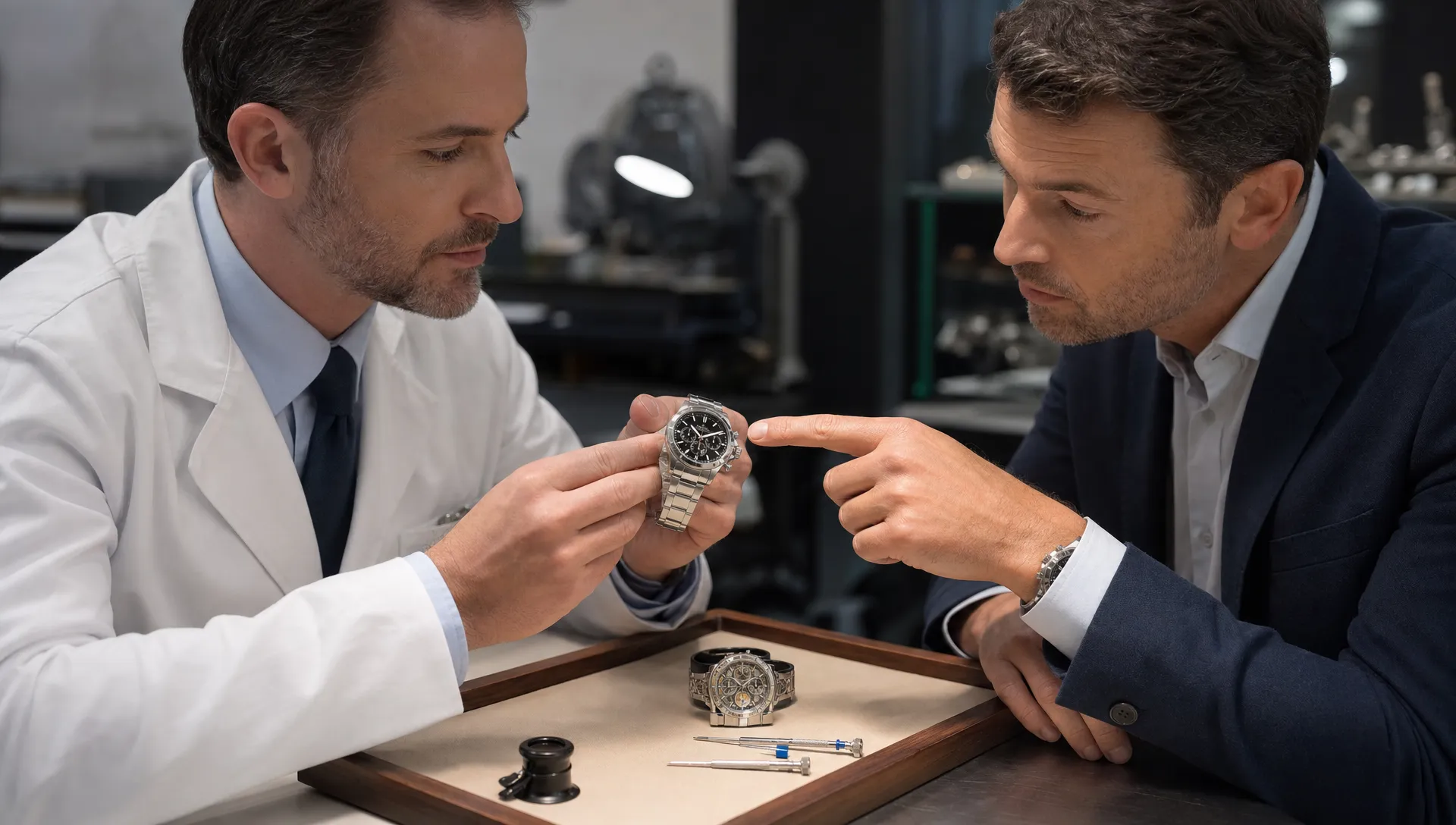
A watch is not bought only through a case diameter, a calibre name or a reference number. It is bought through the feeling that every surface has been considered. Luxury watch 3D animation exists for that exact moment, when a client understands the weight of the craft before the watch is on the wrist.
The best animation does not simply rotate a product in space. It gives rhythm to the invisible work behind the object. A polished bevel catches light at the right angle. A dial texture reveals depth without becoming decorative noise. A bracelet closes with the calm precision of a finished mechanism. The result is not a render. It is belief.
For a maison, that belief has measurable value. It can make a launch film more memorable, increase time spent on a product page, help a client compare variants and give retail teams a sharper story to tell. The asset becomes part of the commercial system, not just part of the campaign.
The job of luxury watch 3D animation
A luxury watch animation has one job: make craftsmanship legible at digital speed.
Most clients will never inspect a movement under controlled light. Many will first meet the watch on a phone, in a CRM email, on a launch page or through a social cutdown. The experience has seconds to communicate what normally takes a trained advisor several minutes to explain.
That is where motion matters. Animation can guide the eye without simplifying the object. It can isolate the crown, slow down the sweep of a hand, travel across a guilloché dial or open a caseback to reveal the architecture of a movement. It does not ask the client to search. It shows what deserves attention.
This is especially important in watchmaking, where value is often hidden in restraint. The more refined the design, the more precise the visual language must be. A generic product spin can flatten a watch. A carefully directed animation can make the silence feel expensive.
Craftsmanship needs choreography
Luxury watchmaking is built on details that are difficult to capture in traditional campaign formats. Reflections move too fast. Macro shots can feel clinical. A full collection shoot can struggle to keep every metal, dial, stone and strap consistent.
CGI solves part of that challenge, but direction solves the rest. The animation must know what to reveal, what to hold back and when to let the product breathe. Too much movement makes the watch feel like a gadget. Too little movement fails to express the work inside it.
| Craft element | What animation should reveal | Client effect |
|---|---|---|
| Polished case | Controlled light across curves, edges and chamfers | Perceived precision and finish |
| Dial texture | Depth, pattern, applied indexes and subtle material shifts | Better understanding of value |
| Movement | Architecture, rhythm and mechanical intelligence | Confidence in technical legitimacy |
| Bracelet or strap | Flex, closure, comfort and proportion on the wrist | Stronger sense of ownership |
| Complication | Clear sequence of function without overexplaining | Easier product comprehension |
The key is hierarchy. Not every screw deserves a close-up. Not every reflection should be spectacular. A maison needs visual control, because craftsmanship is damaged when everything is treated as equally important.
A strong animation reads like a private presentation. It lets the product lead, then uses motion to make the client look closer.
Why watches are difficult to animate well
Watches are unforgiving objects. A perfume bottle can tolerate a little abstraction. A sneaker can carry a more expressive visual world. A fine watch leaves almost no room for approximation.
Metal must feel dense. Sapphire must have thickness. Brushing must follow the geometry of the case. Diamonds cannot look like bright white dots. Lume cannot become a toy effect. The smallest error breaks the spell because the buyer knows, even without naming the issue, that something feels wrong.
This is why luxury watch 3D animation should never be treated as a visual effect added at the end of a campaign. It has to be directed as product storytelling from the beginning.
The difference is visible in the first seconds. A weak animation tries to impress. A strong one earns trust.
From campaign film to content system
The most valuable watch animations are not isolated launch assets. They become the visual foundation for a full content ecosystem.
A hero film may open the world of the watch. The same digital product can then feed e-commerce loops, social edits, paid media, retail screens, advisor presentations and post-launch CRM stories. If the collection includes several references, the same visual system can keep every variant consistent without rebuilding the campaign from zero.
That consistency matters in luxury. A rose gold case should not shift color from a product page to a boutique screen. A blue dial should not feel cinematic in the launch film and flat in the e-commerce grid. When the client moves between channels, the object should feel identical, controlled and unmistakably part of the same maison.
This is one reason more houses are rethinking the role of CGI in watch and jewelry communication. The shift toward replacing photography with CGI for watches and fine jewelry is not only about visual novelty. It is about building a reusable product language with better consistency, faster variation and stronger control.
For launches with multiple materials, dial colors, strap options or limited editions, that control becomes a commercial advantage. One mastered asset can become many pieces of content, each adapted to its placement without compromising the product.
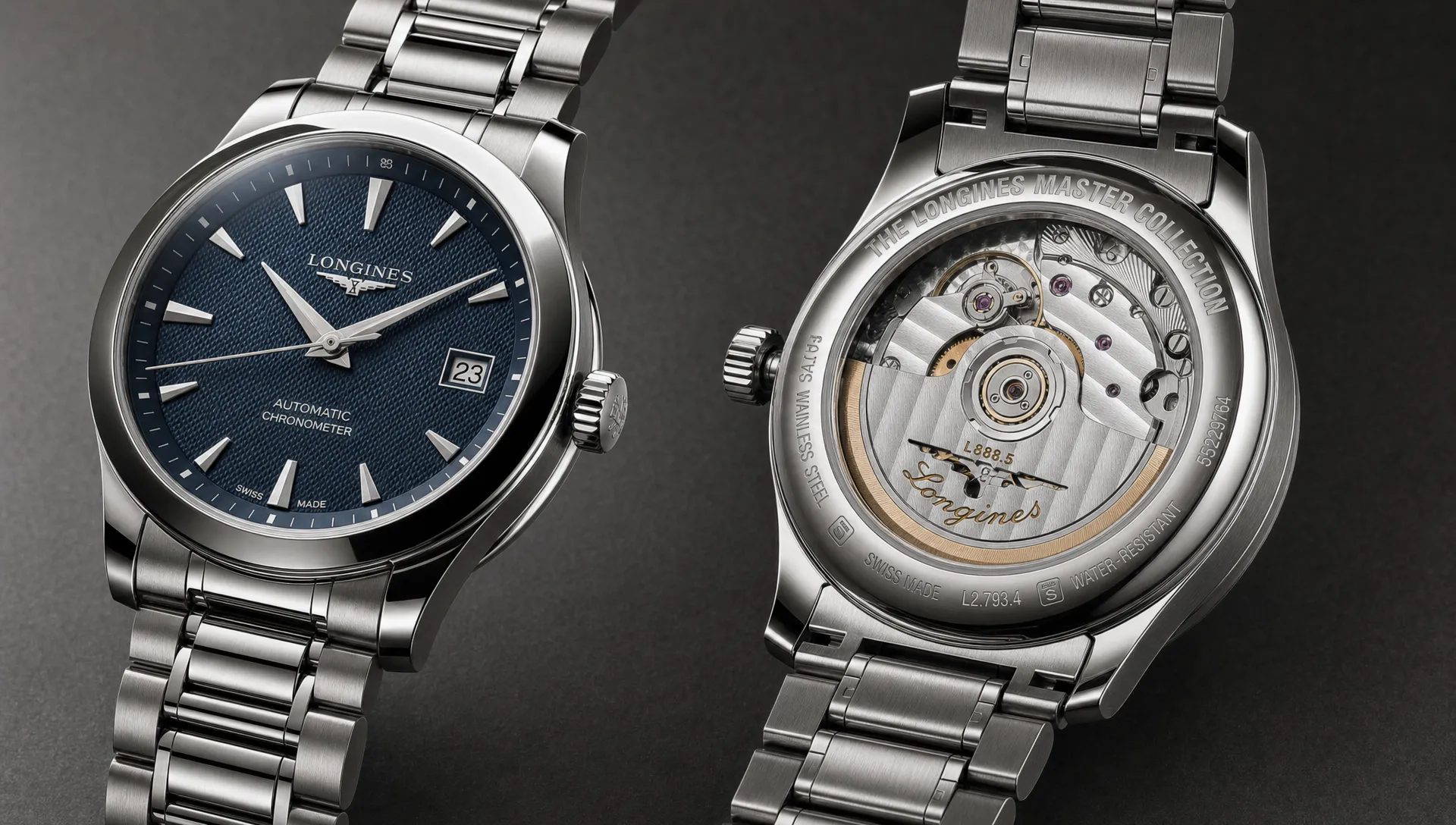
The economics of precision
Traditional shoots still have a place in luxury. They are powerful for talent, atmosphere, campaign narrative and editorial emotion. But when the product must be shown in exact detail across many references, physical production becomes expensive fast.
Each new variant adds time. Each reflection must be controlled again. Each macro image has to negotiate dust, alignment, light and retouching. The more ambitious the collection, the more the production machine grows around the object.
A high-end CGI pipeline changes the economics because the product is built once, then reused with discipline. The same watch can be filmed, cropped, re-lit, localized, adapted for social formats and prepared for future interactive experiences. In a structured content factory, repeat production costs can be divided by three compared with rebuilding physical shoots for every asset family.
The value is not only cost. It is speed and confidence. A maison can approve a precise visual system, then scale it without asking every market, channel or agency to reinterpret the watch.
When animation becomes interaction
The next step after animation is choice.
A film can make a client desire a watch. An interactive experience can help that client understand which version belongs to them. That difference matters for e-commerce, appointment requests and clienteling, especially when the purchase journey starts long before the boutique visit.
For collections with case materials, dial colors, straps or engravings, a 3D configurator lets the client explore without losing the codes of the maison. It gives them time with the object. It reduces uncertainty. It also creates intent signals that a static page cannot capture, such as which variant was explored, how long the client engaged and where hesitation appeared.
This is why a well-designed configurator is not a utility. It is a sales experience. We explore this in more detail in how a 3D product configurator lifts luxury conversion, especially for categories where confidence, personalization and emotional ownership drive action.
For the highest level of browser-based fidelity, real-time streaming can bring cinematic product quality directly to the client without an app download. Unreal Engine and NVIDIA GDN matter here only because they unlock a smoother experience: a watch that looks premium, moves instantly and keeps the client inside the brand environment. The commercial point is simple. Less friction means more time with the product.
If the ambition is an interactive launch world, a configurator or a boutique-grade digital experience, Unreal Engine Pixel Streaming for luxury commerce allows the visual standard to stay high inside the browser.
What a maison should measure
A luxury watch animation should be judged by more than beauty. Beauty is the entry ticket. Performance is what proves the asset is working.
The right metrics depend on where the animation appears, but the principle stays the same: the experience should increase attention, clarity and action.
| Use case | KPI to watch | What it tells the maison |
|---|---|---|
| Launch film | Completion rate and replay rate | Whether the story holds attention |
| Product page | Session time and scroll depth | Whether the asset deepens consideration |
| Configurator | Variant interactions and saved choices | Which references create intent |
| CRM | Click-through rate and return visits | Whether the content revives desire |
| Retail support | Advisor usage and appointment influence | Whether the asset helps sell the story |
A good animation also leaves qualitative traces. Clients ask more precise questions. Advisors have better material to support the conversation. Markets reuse the asset instead of requesting new interpretations. The brand gains control over how the watch is seen.
That is the difference between a beautiful render and a high-performing experience.
The visual rules that protect luxury
A luxury watch should never look overproduced. The animation can be ambitious, but the product must remain sovereign.
Light should reveal form, not decorate it. Camera movement should feel intentional, not restless. Materials should be exact enough for the product team and seductive enough for the client. The film should understand the difference between a technical demonstration and a maison story.
The most successful watch animations often have restraint at their core. They use silence, shadow and controlled rhythm. They avoid the temptation to turn every mechanism into spectacle. They respect the fact that high watchmaking is not loud.
This is where the choice of studio matters. A generic 3D shop may deliver clean images. A luxury-focused studio must protect the codes of the house, the truth of the product and the performance of the experience at the same time.
Frequently Asked Questions
What is luxury watch 3D animation? Luxury watch 3D animation is the creation of moving digital product content that presents a watch with high visual fidelity, from case finishing and dial texture to movement detail. In a luxury context, its role is to reveal craftsmanship, support desire and improve the buying journey.
Can 3D animation show real watch craftsmanship accurately? Yes, if it is built from precise references, guided by strong art direction and approved with product teams. The goal is not to exaggerate the object. It is to make real details visible in a controlled digital environment.
Does 3D animation replace watch photography? Not always. Photography remains valuable for campaign atmosphere, talent and editorial storytelling. CGI and 3D animation are strongest when a maison needs consistency, variant control, macro precision, reusable assets and interactive experiences.
How can 3D animation improve luxury watch e-commerce? It can increase product understanding, extend session time, clarify variant differences and create stronger emotional ownership before purchase or appointment. When connected to interactive experiences, it also reveals which options a client explores most.
What makes a luxury watch animation feel premium? Premium watch animation depends on material truth, restrained motion, precise lighting, product accuracy and a clear hierarchy of details. It should feel like the maison is guiding the client through the object, not like a technology demo.
Craft deserves a sharper digital stage
A fine watch carries years of design, engineering and finishing inside a few centimeters of material. Online, that work deserves more than a flat image and a slow product spin.
The New Face builds KPI-driven CGI films, real-time configurators and immersive product experiences for luxury brands that need both beauty and measurable impact. Based in Paris and incubated by NVIDIA, the studio combines luxury-grade aesthetics, ultra-realistic CGI and real-time mastery for houses across watchmaking, fashion, beauty and premium categories.
If your next launch needs to make craftsmanship visible, memorable and commercially useful, start the conversation with The New Face.
Get in Touch
Let's talk about your next project.