How Immersive Learning Elevates Luxury Brand Training
By Victor Haymann, Founder · 1 August 2026
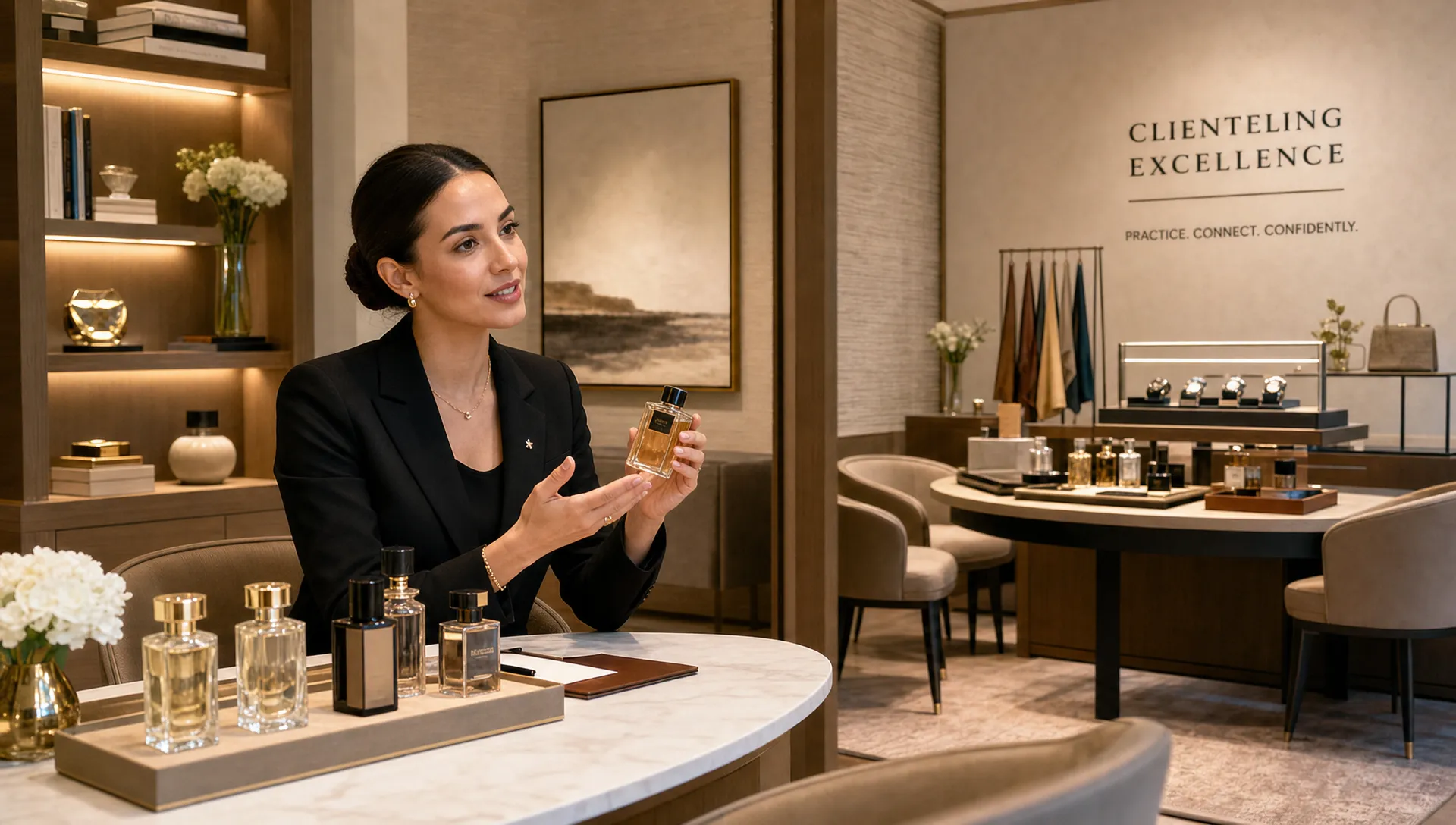
Luxury training has always asked for more than recall. An advisor does not simply need to know the facets of a diamond, the notes of a fragrance, or the trim options of a grand tourer. They need to speak with conviction. They need to make the client feel the product before the purchase.
That is where immersive learning changes the brief.
Immersive learning gives teams a place to rehearse the brand before they represent it. It turns a product launch, a service ritual, or a clienteling scenario into an environment they can enter, explore and repeat. The result is not a more entertaining training module. It is a more confident team, a more consistent experience and a stronger path from brand education to commercial action.
For luxury houses, this matters because training is no longer a back-office subject. It is a brand experience. Every boutique conversation, every CRM message, every appointment, every guided consultation becomes part of the client’s perception of the maison.
The real training problem in luxury is not information
Luxury teams are not under-informed. They are over-briefed.
Before a major launch, headquarters can send retail teams product sheets, campaign films, merchandising guidelines, technical notes, service scripts and market-specific updates. The content is often accurate. It is rarely memorable enough.
The issue is not access. It is transfer.
A PDF can describe the reflection of a lacquered bottle. It cannot make a beauty advisor understand how that reflection changes the perceived value of the fragrance. A video can explain a watch movement. It cannot let a sales associate rotate, inspect and compare it until the story becomes natural. A slide deck can define a service ritual. It cannot create the pressure of a client asking a difficult question.
Immersive learning closes that gap between knowing and embodying. It makes training spatial, emotional and repeatable. That is especially powerful in luxury, where tiny details carry commercial weight.
What immersive learning means for a luxury brand
In luxury, immersive learning is not a headset gimmick. It is a designed rehearsal space.
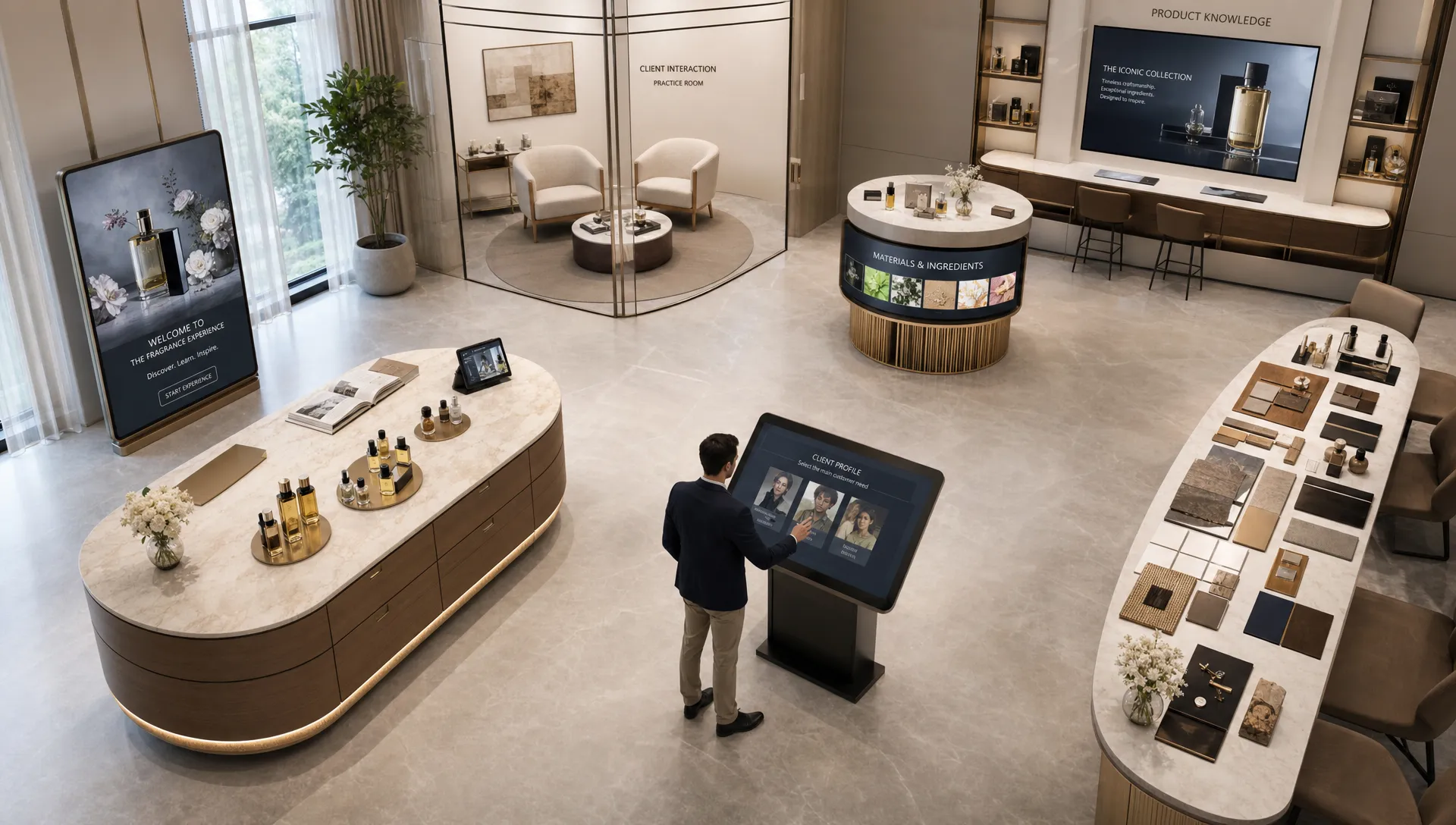
It can take the form of a virtual boutique, an atelier visit, a fragrance ingredient journey, an interactive product masterclass, a styling simulation, a clienteling scenario, or a launch world where teams discover the campaign, the product and the selling story in one coherent experience.
The format should serve the outcome. If the goal is product mastery, the experience must let teams examine details that are hard to show in store. If the goal is service consistency, it must let them practice choices and responses. If the goal is launch alignment, it must translate the creative territory into language that feels natural on the floor.
Technology matters only when it removes distance. Real-time 3D, ultra-realistic CGI and browser streaming can let global teams enter the same premium world without waiting for physical samples, travel budgets, or repeated in-person sessions. The point is not the rendering engine. The point is that every market can train inside the same brand universe, with the same level of aesthetic control.
This is the same logic that makes immersive commerce turn attention into action. The client-facing experience guides desire toward a decision. The internal training experience guides knowledge toward confident behavior.
Why immersive learning changes behavior, not just knowledge
Training becomes valuable when it changes what people do in front of a client.
A widely cited workplace learning study from PwC found that VR learners trained up to four times faster than classroom learners and reported higher confidence in applying what they learned. Luxury training is not identical to corporate soft-skills training, but the principle is highly relevant. People remember more when they are emotionally present, active and placed inside a scenario.
That presence matters in luxury because brand expression is subtle. It is a pause before presenting a piece. It is the order in which a fragrance story unfolds. It is the way an advisor connects a product detail to a client’s personal context.
Immersive learning makes those moments trainable. It lets a watch specialist zoom into a complication, then practice explaining it without sounding mechanical. It lets a beauty advisor move through a scent architecture and understand the emotional role of each note. It lets an automotive consultant configure a model live, then connect performance, finish and personalization to the client’s intent.
The best training does not ask teams to memorize the brand. It lets them inhabit it.
Where immersive learning creates the highest value
For beauty and fragrance, immersive learning can turn abstract sensory language into a navigable world. Notes, ingredients, bottle design, campaign mood and usage moments can be experienced together. This helps advisors move from generic description to precise storytelling, which is often the difference between sampling and conversion.
For fine jewelry and watchmaking, it can make invisible value visible. Craft, movement, setting technique, material origin and scale can be shown with clarity, without compromising the aura of the piece. Teams can revisit the experience as often as needed, especially before high-stakes appointments or collection launches.
For premium automotive, immersive learning can support personalization. Consultants can understand how finishes, materials, colors and options change the client’s perception of the vehicle. The experience becomes a rehearsal for configuration conversations, not just a product catalog.
For fashion and leather goods, immersive learning can connect silhouette, craft, styling and campaign context. It gives teams a stronger grasp of the creative direction behind a collection, which helps them sell the look rather than isolated items.
For CRM and loyalty teams, it creates a shared language. The same world that trains retail can help clienteling teams understand what to emphasize in invitations, private appointments and post-purchase journeys.
The KPI layer: training should prove itself
Immersive learning should be beautiful. It should also be measurable.
For a luxury brand, the right question is not whether teams enjoyed the module. Enjoyment is useful, but it is not enough. The question is whether the experience improved confidence, consistency and commercial readiness.
Relevant KPIs can include:
- Completion rate and voluntary return rate
- Average session time and repeat exploration of key products
- Accuracy in scenario-based choices
- Confidence scores before and after training
- Knowledge retention after several weeks
- Market-level adoption across retail, wholesale, CRM and education teams
- Downstream indicators such as appointment quality, assisted selling performance, or conversion where tracking is available
The most important metric is adoption. If teams do not return to the experience, it becomes a launch novelty. If they use it before client meetings, revisit it during training refreshes and quote it naturally on the floor, it becomes an operating asset.
Teams building AI products face a similar pattern. Trust, repetition and habit often break after the first impressive demo. The AI Product Adoption Deck is useful reading because it frames adoption around the moments where people stop using a product. Luxury training should be held to the same standard. If advisors do not apply it, speak from it and come back to it, the experience is not finished.
How to design immersive learning for luxury teams
Start with the moment of truth.
Do not begin with a list of assets. Begin with the client conversation that must improve. What should an advisor say with more confidence? What should a consultant show more clearly? What objection should feel easier to handle? What product detail should become unforgettable?
Then build the world around that behavior.
If the challenge is storytelling, the environment must create memory. Campaign mood, product detail and client language should live together. If the challenge is product complexity, the experience must simplify without reducing prestige. If the challenge is service consistency, the module must invite choice, feedback and repetition.
This is where campaign worlds and training worlds can reinforce each other. A virtual environment built for a launch can also become an internal education asset, because virtual environments make campaigns more memorable when they create context, emotion and interaction. The same qualities help teams remember what they need to say and do.
The experience should also have an afterlife. A strong immersive learning asset can support launch training, market onboarding, seasonal refreshes, retail academies and private client preparation. When built with high-end CGI, it can also generate visual material for internal communication and selective commercial use. That is where production value becomes business value.
What separates a premium experience from a generic 3D module
Luxury audiences can feel the difference immediately.
A generic 3D module treats the product as information. A premium immersive learning experience treats it as desire, craft and culture. The lighting matters. The material response matters. The scale of a detail matters. The rhythm of discovery matters.
This is why luxury brands need more than technical execution. They need an experience that respects the codes of the maison and the expectations of its teams. A training world for a jewelry house should not feel like a product demo. A fragrance module should not feel like a game. An automotive personalization experience should not feel like a utility configurator stripped of emotion.
The standard is higher because the audience is internal, but the brand risk is external. Every undertrained conversation eventually reaches the client.
The strongest immersive learning experiences combine three disciplines. Luxury-grade art direction gives the world its authority. Ultra-realistic CGI makes products credible at close range. Real-time mastery makes the experience interactive, fluid and measurable. When those three work together, training becomes a brand asset rather than a compliance task.
For The New Face, this is the core difference. The studio builds KPI-driven virtual experiences for ambitious brands, with the aesthetic discipline luxury requires and the real-time production knowledge needed to make those experiences usable at scale. Its NVIDIA incubation strengthens access to advanced rendering and streaming technologies, but the value is simple: richer experiences, delivered with less friction, built to perform.
Common mistakes to avoid
The first mistake is making the experience too informational. Immersion does not mean putting every detail into a 3D space. It means choosing the details that change behavior and building a memorable path around them.
The second mistake is overemphasizing hardware. Headsets can be powerful in the right context, especially for deep simulation. But many luxury training programs need reach, not novelty. Browser-based access can be more valuable when teams are spread across regions, boutiques, agencies and wholesale partners.
The third mistake is separating training from the commercial journey. If the learning experience has no connection to clienteling, retail rituals, e-commerce storytelling, appointment preparation, or launch KPIs, it will remain isolated. Immersive learning works best when it strengthens the full brand ecosystem.
The fourth mistake is accepting lower aesthetic standards because the audience is internal. That is a false economy. Your teams are the first audience of the launch. If they do not feel the desirability of the product, they cannot transmit it.
Frequently Asked Questions
What is immersive learning in luxury brand training? Immersive learning is a training approach that places teams inside interactive brand environments, product worlds, or client scenarios. For luxury brands, it helps teams understand product value, brand story and service behavior through experience rather than static content.
Does immersive learning require VR headsets? Not always. Headsets can be useful for certain simulations, but many luxury training experiences can run through browsers or streamed real-time environments. The right format depends on reach, audience, market structure and the desired behavior change.
Which luxury teams benefit most from immersive learning? Retail advisors, education teams, CRM leaders, clienteling teams, wholesale partners, regional marketing teams and e-commerce teams can all benefit. The value is strongest when the training supports a launch, a complex product story, a service ritual, or a personalization journey.
How should a brand measure immersive learning? Strong metrics include completion, return rate, session time, scenario accuracy, confidence uplift, knowledge retention and downstream commercial signals where available. The goal is to connect training engagement with better client conversations and stronger readiness.
How is immersive learning different from an immersive campaign? An immersive campaign is designed for client attention and brand memory. Immersive learning is designed for internal behavior change. The two can share assets and creative worlds, but the training experience must include practice, guidance and measurable adoption.
Build training your teams can feel
Your next launch will not be remembered because teams downloaded another PDF. It will be remembered when they can walk through the story, handle the product with confidence, rehearse the conversation and carry the emotion into the client relationship.
That is the promise of immersive learning for luxury. Not more content. More conviction.
If you are preparing a launch, retail academy, product education program, or global training experience, The New Face can help turn it into a high-end virtual experience built for attention, adoption and measurable performance.
Get in Touch
Let's talk about your next project.