How a Branded Video Game Builds Lasting Luxury Engagement
By Victor Haymann, Founder · 3 August 2026
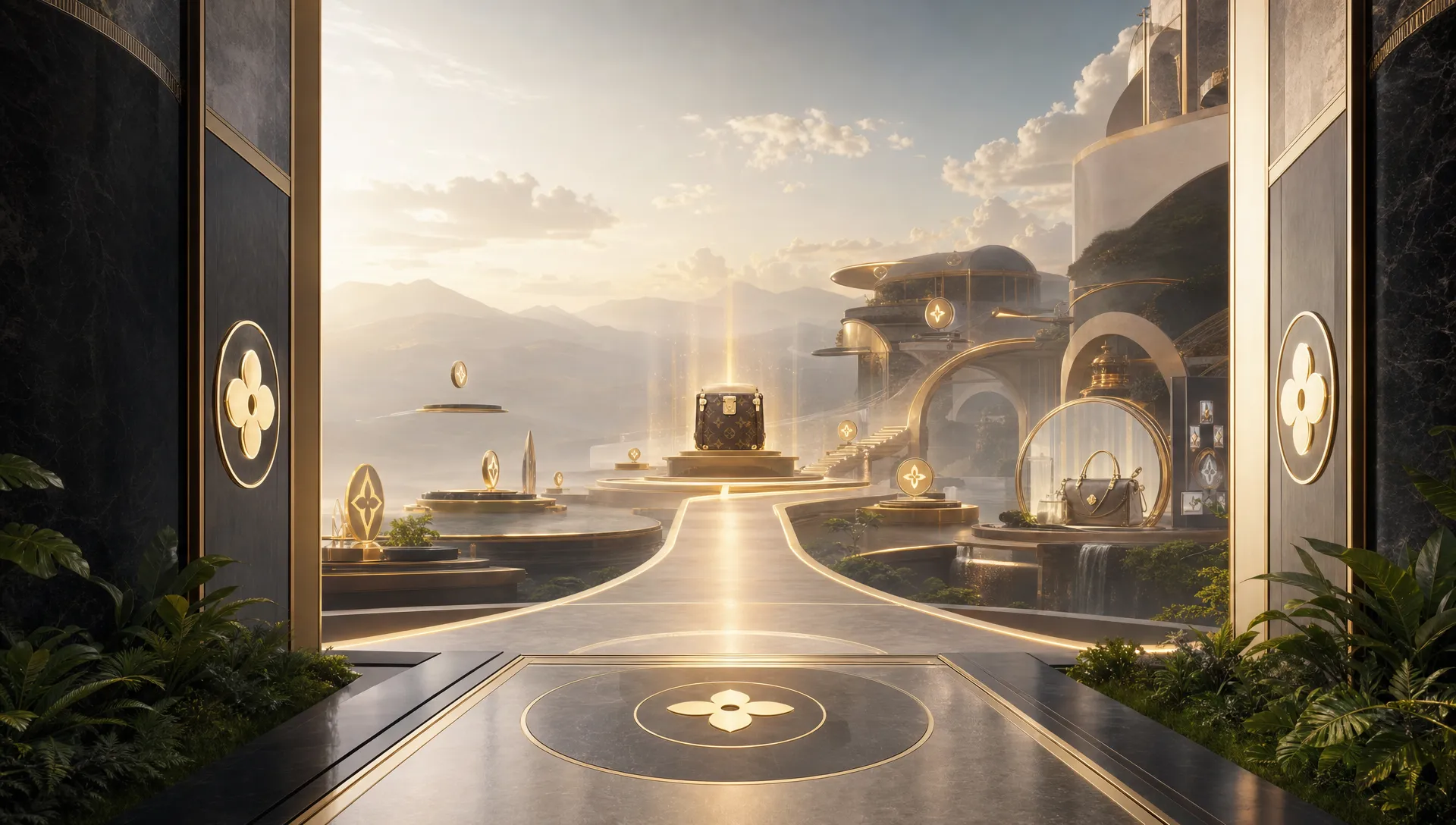
A luxury client does not remember every campaign she sees. She remembers the moments she entered.
That is the difference a branded video game can create when it is built with taste. It does not ask the audience to watch a brand message. It invites them to move through it, make choices inside it and spend time with the codes of the maison.
For luxury, that matters. Attention is no longer scarce because people cannot see enough content. It is scarce because most content gives them no reason to stay.
A branded video game gives them a reason.
The real promise is active attention
A film can seduce in thirty seconds. A game can hold attention for minutes, sometimes longer, because the audience is no longer passive. They explore. They unlock. They return. They compare. They talk.
This is not about making luxury playful for the sake of novelty. It is about turning brand desire into participation.
In a strong branded video game, the product is not simply displayed. It becomes part of a world. A fragrance is discovered through atmosphere. A watch is understood through precision, rhythm and movement. A car is felt through speed, material and control. A couture piece is not just worn by an avatar, it becomes a sign of status inside the experience.
That shift is powerful because luxury is already interactive in the real world. A client enters a boutique, touches materials, hears a story, receives attention, chooses slowly. Digital campaigns often flatten that ritual into an image. A branded video game can restore some of its depth.
Why luxury has more to gain than mass brands
Mass brands often use games to generate reach. Luxury should use them to create memory.
The goal is not to entertain everyone. The goal is to create a highly controlled moment for the right audience, with enough beauty, mystery and reward to make the experience feel worth their time.
Luxury engagement is built on three forces: desire, recognition and belonging. A branded game can activate all three. Desire comes from the world and its objects. Recognition comes from the audience understanding the codes. Belonging comes from access, progression and reward.
This is why high-consideration fashion and ceremonial retail offer a useful parallel. A bridal destination such as Le Michel Bruidsmode is not only selling inventory. It is staging choice, fitting, advice, anticipation and memory around an emotionally charged decision. Luxury can translate the same principle into a digital world, where the path toward the product becomes part of the value.
The experience matters because the purchase is never purely functional.
A game turns a campaign into a place
Most campaigns are consumed and forgotten. A strong game gives the campaign a location.
That location can live before a launch, during a drop and after the media burst has ended. It can receive new chapters, new objects, new challenges, new VIP access and seasonal updates. The brand does not need to start again each time. It can deepen the same world.
This is where a branded video game becomes more than content. It becomes an engagement asset.
The best luxury games are not built like disposable media. They are built like spatial stories, with atmosphere, pacing and meaning. They give the audience a mental map of the brand. That is why virtual environments make campaigns more memorable when they are designed around emotion and interaction, not decoration.
A luxury world should feel authored. Every room, path, object and sound should have a reason to exist. If the audience can replace the logo with another brand and the game still works, the concept is too generic.
What makes a branded video game feel luxury
The luxury standard is not higher because the visuals must be polished, although they must. It is higher because every interaction must feel intentional.
A branded game fails when it behaves like a generic mobile game with a logo attached. It succeeds when its mechanics express the house. A jewelry maison may build tension through discovery and rarity. A fragrance house may build progression through notes, ingredients and moods. A fashion maison may use silhouette, movement and access as the core of the experience.
| Design choice | What it creates for the audience | Why it matters for luxury |
|---|---|---|
| A world rooted in brand codes | Immediate recognition and emotional continuity | The game feels like the maison, not a media stunt |
| Selective rewards | A sense of access, progression and status | Luxury engagement depends on earned attention |
| Slow reveals | Anticipation and curiosity | Desire grows when everything is not shown at once |
| Product-led interaction | Better understanding of detail, use and value | The product becomes memorable through action |
| A clear next step | Qualified intent after the experience | Engagement can move toward commerce, CRM or appointment |
The level of restraint is important. Luxury does not need noise. It needs control.
A game can be cinematic, immersive and measurable without becoming loud. In fact, the most premium experiences often do less. They let the audience look closer. They reward patience. They make silence, scale and detail part of the tension.
Where commerce belongs without breaking the spell
The biggest mistake is to push conversion too early.
A branded video game should not feel like a checkout page wearing a costume. The commercial layer should arrive naturally, after the audience has built desire. That could mean saving a product configuration, booking a boutique appointment, joining a waitlist, claiming a loyalty reward, accessing a private drop or moving from the game into an e-commerce journey.
The principle is simple: the game earns the right to ask.
This is the same logic behind immersive commerce. Participation creates a stronger signal than a scroll. Someone who completes a product challenge, explores a virtual boutique or customizes an object is giving the brand more than attention. They are giving intent. That is why immersive commerce turns attention into action when the next step is integrated with elegance.
For a CMO, this is where the conversation becomes serious. The branded game is not judged only by impressions. It is judged by time, return, product interaction and downstream behavior.
The KPIs that prove lasting engagement
A luxury branded game should be beautiful, but beauty is not the business case. The business case is measurable engagement.
The strongest projects define success before production begins. A launch game may optimize for reach and earned conversation. A loyalty game may optimize for repeat visits and CRM identification. A product education game may optimize for interaction depth and qualified traffic to product pages.
| KPI | What it measures | Why it matters |
|---|---|---|
| Average session time | How long the audience chooses to stay | A direct signal of active attention |
| Completion rate | How many users reach the intended moment | Shows whether the experience is clear and compelling |
| Return visits | Whether the world gives people a reason to come back | Indicates lasting engagement, not one-time curiosity |
| Product interaction rate | How often users engage with items, variants or stories | Connects play to product desire |
| CRM opt-in or login rate | How many users identify themselves | Turns anonymous attention into a relationship |
| Click-through to commerce or appointment | Whether desire moves into action | Links the experience to conversion potential |
The right KPI mix depends on the role of the experience. What matters is discipline. A branded video game should never be defended only as innovation. It should show how it moved attention, intent and memory.

Technology should disappear into the experience
The audience does not care what engine powers the game. They care whether it feels fluid, beautiful and immediate.
For luxury brands, the technical standard is unforgiving. The world must load easily. Materials must look desirable. Movement must feel natural. The experience must work without asking the client to download an app, wait too long or accept visual compromise.
This is where real-time technology matters, not as a technical boast, but as a brand advantage. Unreal Engine and cloud streaming can allow cinematic interaction directly in the browser. NVIDIA GDN can help preserve visual quality while reducing friction. Ultra-realistic CGI makes product, light and material feel premium before the audience ever touches the physical object.
The technology is successful when it becomes invisible.
The New Face is built around that standard. As a Paris-based creative studio incubated by NVIDIA, the studio combines luxury-grade aesthetics, ultra-realistic CGI production and real-time mastery to create experiences that can be measured, not just admired.
Category by category, the opportunity is different
For beauty and fragrance, a branded video game can make the invisible visible. Notes, ingredients and emotions can become environments. A scent can be explored as a journey instead of explained as a list.
For fine jewelry and watches, the opportunity is precision. The game can reveal craft, rarity and mechanics through controlled interaction. It can make scale, movement, sparkle and detail more understandable than a static image.
For fashion, it can extend a show, capsule or collaboration into an inhabitable universe. The audience can discover silhouettes, codes and accessories through progression, not just viewing.
For premium automotive, the game can translate performance into feeling. Light, speed, sound and configuration can become a controlled brand experience long before a test drive.
For loyalty and CRM teams, the value is repeatability. A game can host missions, private previews, collectible access and seasonal moments. It can make members feel recognized without reducing the brand to discounts.
Each category needs a different mechanic. That is the point. The experience should come from the product truth, not from a borrowed gaming format.
What to avoid
A branded video game becomes weak when it confuses interaction with depth.
A few clickable objects are not enough. A leaderboard is not automatically engaging. Collectibles are not meaningful unless the audience wants what they represent. Avatars do not create identity unless the styling, access or progression expresses the brand.
Luxury brands should be especially careful with forced gamification. Points, badges and countdowns can cheapen the experience if they feel imported from mass retail. The best mechanics are often quieter: discovery, access, mastery, personalization, invitation.
Another risk is visual inconsistency. A luxury audience will notice the gap between campaign imagery and interactive experience. If the game looks less refined than the brand's stills or films, it damages the world it was meant to extend.
Finally, avoid unclear endings. The audience should know what they earned, what they discovered and what they can do next. Lasting engagement needs closure and continuation.
How to brief a luxury branded game
A strong brief starts with the audience, not the platform.
Who should enter this world? What should they feel after thirty seconds? What should they understand after three minutes? What action should be natural at the end? What should make them return?
Once those questions are clear, the creative structure can follow. The game might be an explorable maison, a product quest, a virtual race, a collectible ritual, an invitation-only loyalty world or a cinematic configurator with playable moments.
The format matters less than the outcome.
A useful internal brief can be reduced to five decisions: the engagement goal, the product truth, the brand world, the interaction mechanic and the conversion path. If one of those is vague, the project will look impressive but underperform.
Luxury does not need more digital spectacle. It needs digital experiences with intent.
Frequently Asked Questions
What is a branded video game? A branded video game is an interactive experience created around a brand's world, products and codes. For luxury, it should build desire, memory and measurable engagement, not simply place a logo inside a game.
Can a branded video game drive luxury sales? Yes, if commerce is integrated with restraint. The game should first create desire, then guide the audience toward a natural next step such as product discovery, appointment booking, configuration, CRM opt-in or e-commerce.
Is a branded game only relevant for younger audiences? No. Gaming behavior is broad, but the format should be designed for the specific client segment. Luxury games do not need to imitate youth culture. They need to respect the audience's taste, time and expectations.
How long should a luxury branded game last? It depends on the role. A launch game may run for a few weeks with strong media support. A loyalty or immersive commerce experience can live longer, with seasonal updates and private access moments.
What makes a luxury branded game successful? Success comes from the combination of visual desirability, meaningful interaction, brand coherence and clear KPIs. Average session time, return visits, product interaction and qualified next steps matter more than novelty.
Build the experience people return to
A branded video game should not be justified by the fact that it is interactive. It should be justified by what interaction creates: more time, stronger memory, richer product desire and clearer intent.
For luxury brands, the opportunity is not to enter gaming culture. It is to build a world where the audience chooses to spend time with the brand.
That world must be beautiful. It must be fluent. It must be measurable. Above all, it must feel inevitable for the maison behind it.
If the ambition is to create an experience that performs as sharply as it looks, The New Face builds branded worlds, CGI campaigns and real-time experiences for luxury houses ready to turn attention into lasting engagement.
Get in Touch
Let's talk about your next project.