AI Content Production for Luxury Brands: What a Sustainable Model Looks Like
By Victor Haymann, Founder · 7 July 2026
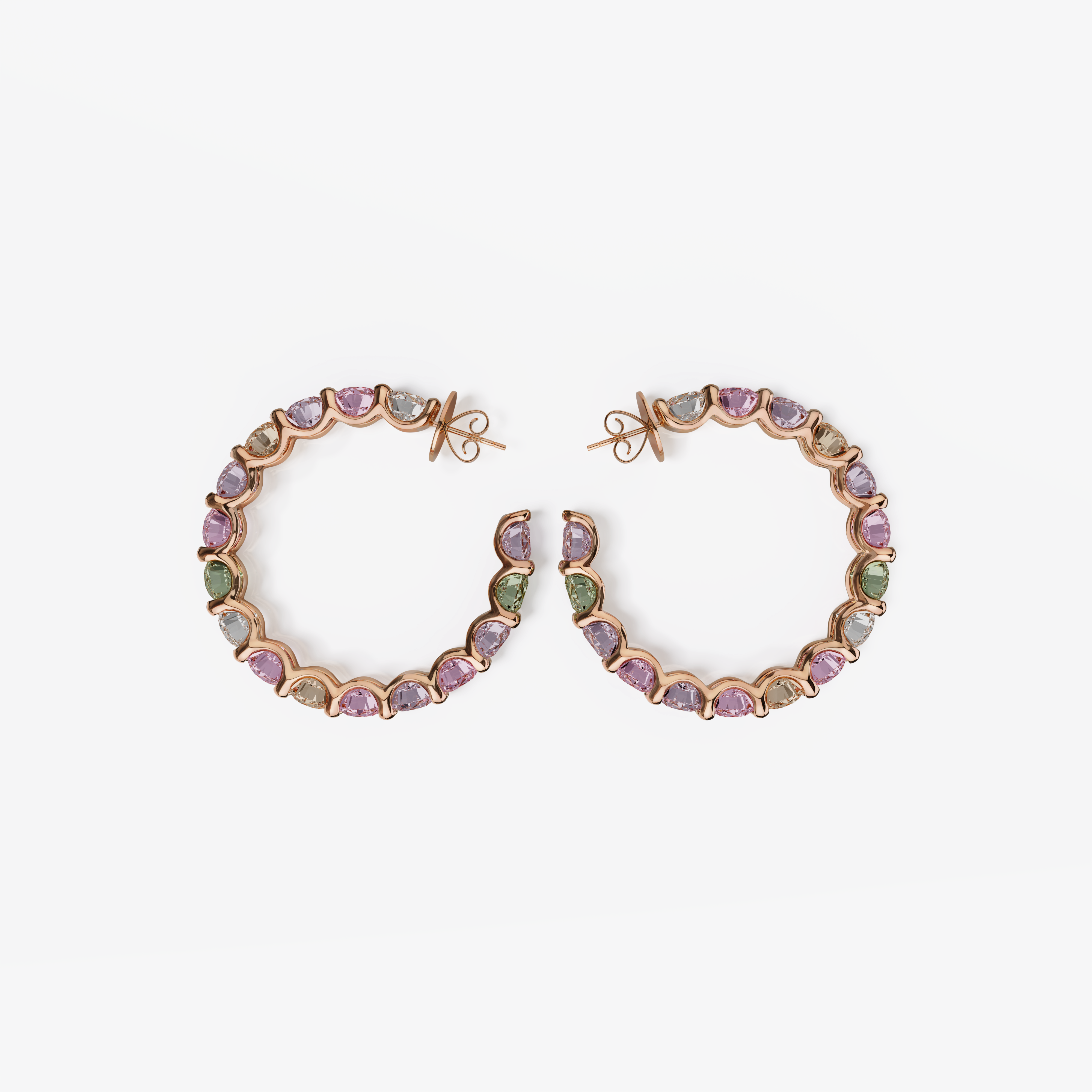
What sustainable AI content production actually means for a luxury brand
A sustainable AI content production model for a luxury fashion brand is an ongoing relationship, not a one-off image generation experiment. It combines a brand-trained model, human creative direction, quality guardrails, and clear rights ownership so a brand can produce a higher volume of on-brand content without scaling budget or headcount at the same rate. The model is trained on the brand's own products, materials and codes. Every output passes through art direction and retouching before it reaches a channel. Legal ownership of the trained model and its outputs sits with the brand or is contractually clear. The goal is not to replace photographers or CGI artists. It is to remove the repetitive, high-volume production work (colourways, environments, ecommerce packshots, seasonal variations) so creative teams spend their time on the images that define the brand. Done properly, quality holds and output multiplies.
Why the one-off AI image conversation is the wrong one
Most brands I speak with have already tried AI images. Someone on the team ran a prompt, got a striking result, and then discovered the problem: the model does not know their product. The stitching is wrong. The clasp is invented. The leather grain drifts between shots. It looks like their world but it is not their bag.
That is the ceiling of generic AI. It produces plausible luxury, not your luxury. For a Maison whose entire value is precision and consistency, plausible is worthless.
The real question is not "can AI make one good image." It is "can AI produce three hundred images this quarter that are all indisputably ours." That requires a system, not a prompt.
The four components of a working model
1. A brand-trained model
The foundation is a model trained on your assets: product references, material scans, existing campaign imagery, colour standards. This is what teaches the system your specific hardware, your specific finishes, your house codes. A generic model guesses. A trained model reproduces. The difference is the entire business case.
Where physical accuracy is non-negotiable (a watch dial, a jewellery setting, a signature hardware detail), we anchor production in CGI built from the real product geometry rather than leaving it to inference. AI accelerates the surrounding work. It does not get to invent the product.
2. Human creative direction
No output ships raw. Every image passes through an art director who checks it against the brief and the brand book, then through retouching. This is the guardrail that separates a content operation from a content risk. The AI generates volume. Humans decide what is worthy of the name on it.
This is also why the relationship is ongoing rather than a tool you buy. The value is in the judgement applied on top of the generation, season after season.
3. Quality guardrails
Guardrails are the rules that make output predictable:
- A locked visual reference set the model is measured against
- Defined acceptance criteria per asset type (ecommerce, editorial, social)
- A review stage before anything reaches a channel
- Version control so the model improves rather than drifts
Without these, AI content becomes a lottery. With them, it becomes a supply chain.
4. Legal and rights clarity
This is the part most conversations skip, and the part that keeps a Head of Content awake. Three questions need answers before you scale:
- Who owns the trained model? It should be you, or the ownership terms should be explicit.
- Who owns the outputs, and are they cleared for commercial use across your channels?
- What was the training data, and is it your first-party material rather than scraped work you cannot account for?
A sustainable model uses your assets, documents its inputs, and gives you defensible ownership. Anything less is a liability dressed as an efficiency.
How AI output integrates with your existing creative
The fear I hear most often is that AI production will fracture the brand into two visual languages: the "real" campaign work and the cheaper AI content that looks slightly off next to it. That happens when AI runs as a separate track. It does not happen when it runs inside your existing creative direction.
In practice, that means the same art directors who own your campaign imagery also sign off on the AI-assisted volume. The trained model is fed the same references as your hero shoots. The retouching standard is identical. A customer scrolling your site should not be able to tell which product image was photographed and which was produced. That is the test, and it is achievable.
Think of it as tiers of a single system:
| Tier | Method | Best for |
|---|---|---|
| Hero campaign | Photography or high-end CGI | Brand-defining imagery |
| Product and configuration | CGI from real geometry | Colourways, materials, ecommerce |
| High-volume variation | AI-assisted, human-directed | Environments, seasonal edits, social |
The tiers share the same brand model and the same review. That is what keeps them coherent.
What changes operationally for your team
The shift is less about technology and more about workflow. A few things move:
- Briefs become more structured, because a structured brief is what a trained model rewards
- Your team reviews more and produces less of the repetitive work by hand
- Turnaround on variations shortens, because reshoots become re-renders
- The bottleneck moves from production capacity to creative decision-making, which is where you want it
The outcome a CMO cares about: more content, held to the same standard, without a proportional rise in cost or headcount. You are not buying images. You are building an asset (a trained model of your own brand) that produces images.
Where the savings actually come from
The savings are not in a cheaper single image. They are in the marginal cost of the next one. A physical shoot has a floor: crew, location, samples, logistics. Every additional colourway or environment adds cost. A trained CGI and AI pipeline inverts that. The first asset carries the setup. Each variation after it costs a fraction.
For a brand producing dozens of product variations per season across multiple markets, that curve is the entire argument. This is also why CGI is the honest recommendation for anything hard to shoot at scale, and why it is often the only option for big-ticket products where you cannot physically stage every configuration.
Frequently asked questions
Will AI content dilute our brand? Only if it runs outside your creative direction. Inside it, with the same art directors and the same review standard, output stays coherent. The guardrail is human judgement, not the tool.
Do we own the trained model? You should. In our engagements, the model is trained on your first-party assets and the ownership terms are explicit. That is what makes it a sustainable model rather than a dependency.
Does this replace our photographers? No. It removes the repetitive volume work so your creative team and your photographers focus on the imagery that defines the brand. The hero work stays human.
How accurate can product detail be? Where accuracy is critical, we build in CGI from the real product geometry so hardware, materials and proportions are exact. AI accelerates the surrounding production rather than inventing the product.
How do we start without committing the whole catalogue? With a test. One product, produced to your standard, so you can judge the output against your own imagery before scaling.
The starting point I recommend
Every brand I work with starts the same way, and it is deliberately small. We take one of your products and produce it, so you can put our output next to your real imagery and decide whether you can tell the difference. If you can, we are not ready. If you cannot, you have your answer and a model you can scale.
That test is the fastest way to move past the theoretical conversation. It replaces opinions about AI with a specific result about your product.
You can see the range of what we produce for luxury Maisons across jewellery, fashion, beauty and beyond on our works. If you are weighing how to scale content volume without scaling budget, book a meeting or request a free CGI test on one of your products. Send us the reference and we will show you what a sustainable model looks like, with your product in the frame.
Victor Haymann, Founder, The New Face
Get in Touch
Let's talk about your next project.